
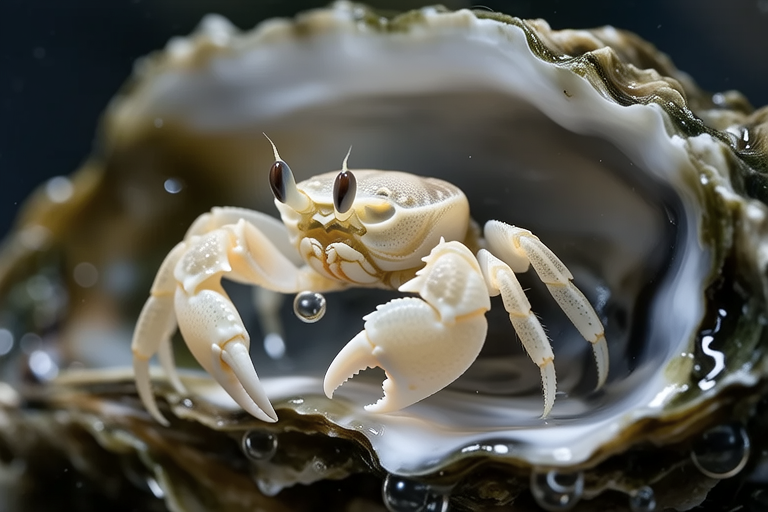
The Enigmatic Pea Crabs: Microscopic Marvels of the Marine World
Pea crabs, also known as Pinnotheridae, are among the smallest crabs in the world, with some species measuring less than a centimeter in length. Despite their diminutive size, they have adapted to an extraordinary lifestyle that has fascinated marine biologists for centuries. These tiny crustaceans have evolved a unique relationship with various marine organisms, particularly bivalves like oysters, clams, and mussels. Their life cycle, habitat, behavior, and adaptations offer a captivating glimpse into the intricate web of marine biodiversity.
The Life Cycle of Pea Crabs
The life cycle of pea crabs is complex and involves several stages. It begins with the eggs, which are carried by the female until they hatch into free-swimming larvae. These larvae, called zoeae, drift through the water column, feeding on plankton. After several molts, the larvae metamorphose into megalopae, which seek out suitable hosts to settle into. Once inside their host, the megalopa undergoes further development into juvenile and adult forms. The entire process is highly specialized, ensuring that pea crabs can thrive in their chosen niche.
Habitat and Behavior
Pea crabs are found in a variety of marine habitats, from shallow coastal waters to deep-sea environments. They are most commonly associated with bivalves, where they reside inside the mantle cavity, protected from predators and harsh environmental conditions. Inside their hosts, pea crabs play a dual role: they act as both parasites and commensals. As parasites, they feed on the host’s tissues and fluids; as commensals, they benefit from the protection and resources provided by the host without causing significant harm.
The behavior of pea crabs is closely tied to their symbiotic relationships. They are highly mobile within their hosts, moving between different chambers to find food and avoid overcrowding. This mobility allows them to exploit various parts of their host’s body, ensuring a steady supply of nutrients. Additionally, pea crabs have been observed to synchronize their movements with the opening and closing of their host’s valves, suggesting a level of coordination that enhances their survival.
Unique Adaptations
One of the most remarkable aspects of pea crabs is their ability to adapt to life inside their hosts. Their small size and flattened bodies allow them to fit snugly within the narrow spaces of bivalve shells. Moreover, pea crabs have developed specialized mouthparts that enable them to efficiently extract nutrients from their hosts. Some species even have elongated appendages that help them reach deeper into their hosts’ tissues.
Another fascinating adaptation is the way pea crabs reproduce. Males and females engage in a courtship ritual that involves chemical signals and physical interactions. Once mating occurs, the female carries the fertilized eggs under her abdomen until they hatch. This reproductive strategy ensures that the offspring will be born directly inside a host, increasing their chances of survival.
Symbiotic Relationships
The symbiotic relationships between pea crabs and their hosts are a cornerstone of their success. While pea crabs benefit from the protection and resources provided by their hosts, the hosts also gain from these relationships. For example, pea crabs can improve the reproductive success of their hosts by cleaning out harmful bacteria and parasites. In some cases, pea crabs may even stimulate the growth of their hosts by enhancing nutrient uptake.
Recent studies have revealed that the relationship between pea crabs and their hosts is more complex than previously thought. Researchers have discovered that pea crabs can influence the behavior of their hosts, leading to changes in shell growth patterns and valve movement. These findings suggest that the symbiosis between pea crabs and their hosts is a dynamic and mutually beneficial partnership.
Mysteries of Communication and Survival Strategies
Despite decades of research, many aspects of pea crab behavior remain shrouded in mystery. One of the most intriguing questions is how pea crabs communicate with each other and their hosts. While it is known that chemical signals play a role in reproduction and host selection, the exact nature of these signals and their mechanisms of action are still poorly understood.
Survival strategies within hosts also present a puzzle. Pea crabs must navigate a delicate balance between exploiting their hosts and avoiding detection by predators. Recent studies have suggested that pea crabs may use camouflage or mimicry to blend in with their hosts, making them less visible to potential threats. However, much more research is needed to fully understand these strategies.
Evolutionary Traits
The evolutionary history of pea crabs is a subject of ongoing debate among scientists. Some researchers believe that pea crabs evolved from free-living ancestors that gradually became more dependent on their hosts. Others argue that pea crabs originated as parasitic organisms that later developed commensal relationships with their hosts. Regardless of their origins, pea crabs have demonstrated remarkable adaptability, evolving specialized traits that allow them to thrive in diverse marine environments.
Recent Scientific Findings
In recent years, advances in molecular biology and genetic analysis have provided new insights into the lives of pea crabs. Scientists have identified specific genes and proteins that are involved in the symbiotic relationships between pea crabs and their hosts. These findings have opened up new avenues for research, including the development of targeted therapies for managing pea crab populations in aquaculture settings.
Additionally, studies have shown that climate change and ocean acidification may have significant impacts on pea crab populations. Rising temperatures and changing pH levels could alter the availability of suitable hosts, potentially disrupting the delicate balance of these ecosystems. Understanding these effects is crucial for developing effective conservation strategies.
Conservation Efforts
Given the importance of pea crabs in marine ecosystems, conservation efforts are essential to protect their populations. One approach is to promote sustainable fishing practices that minimize the accidental capture of pea crabs. Another strategy is to establish marine protected areas that provide safe havens for both pea crabs and their hosts. Additionally, raising public awareness about the ecological significance of pea crabs can encourage greater support for conservation initiatives.
Recent developments in aquaculture have also contributed to the conservation of pea crabs. By cultivating bivalves in controlled environments, farmers can ensure that pea crabs have access to healthy hosts, reducing the risk of population declines. Furthermore, aquaculture provides valuable data on pea crab behavior and ecology, which can inform conservation strategies.
Conclusion
Pea crabs are truly remarkable creatures, showcasing the wonders of marine biodiversity. From their microscopic size to their complex symbiotic relationships, these tiny crustaceans have adapted to an extraordinary lifestyle that continues to fascinate scientists and enthusiasts alike. As we continue to unravel the mysteries of pea crabs, it is clear that they hold important lessons for understanding the intricate web of life in our oceans. By protecting these enigmatic creatures and their hosts, we can ensure the health and resilience of marine ecosystems for generations to come.