
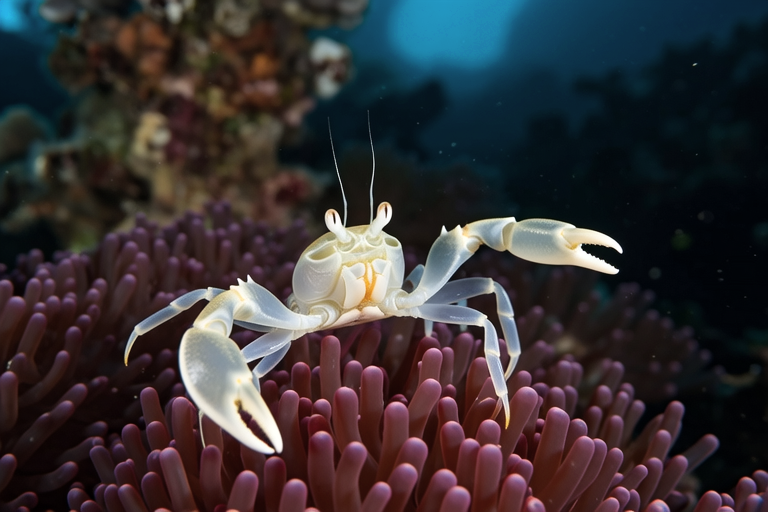
The Intriguing Life of Pea Crabs: Microscopic Marine Mysteries
Pea crabs (Pinnotheres species) are tiny crustaceans that live within the gills or mantle cavities of various bivalve mollusks, including oysters, clams, and mussels. Their lives are intertwined with their hosts in fascinating symbiotic relationships that have evolved over millions of years. This article delves into the life cycle, habitat, and unique adaptations of pea crabs, exploring their microscopic size, evolutionary traits, and roles in marine ecosystems. We will also discuss the challenges they face in their oceanic environments and their significance in ecological balance.
The Life Cycle of Pea Crabs
The life cycle of pea crabs is closely tied to their hosts. Females lay eggs in the water column, and after hatching, the larvae must find a suitable host within a few days. Once inside, the larvae undergo several molts before reaching adulthood. The adult crabs remain inside the bivalve for the rest of their lives, growing slowly but steadily. This lifestyle allows them to avoid many of the dangers faced by free-swimming crustaceans, such as predation and environmental stress.
Habitat and Symbiotic Relationships
Pea crabs inhabit the gill chambers or mantle cavities of bivalves, where they can feed on plankton and detritus filtered by their hosts. This symbiotic relationship benefits both parties: the bivalves gain protection from parasites, while the pea crabs receive a safe environment and a steady food supply. However, this relationship can sometimes become parasitic if the crabs consume too much of the bivalve’s resources, leading to reduced growth or even death of the host.
Microscopic Size and Evolutionary Traits
Pea crabs are among the smallest crabs in the world, measuring just a few millimeters in length. Their small size allows them to fit comfortably within the confines of their host’s shell. Over time, they have evolved specialized appendages for feeding and mating, as well as thickened carapaces to protect against predators. These adaptations enable them to thrive in their unique environment, where space is limited and competition for resources is fierce.
Roles in Marine Ecosystems
Despite their small size, pea crabs play an important role in marine ecosystems. They help control populations of smaller organisms like plankton and contribute to nutrient cycling by breaking down organic matter. Additionally, their presence can indicate the health of bivalve populations, which are vital components of many coastal ecosystems.
Challenges in Oceanic Environments
Pea crabs face numerous challenges in their oceanic environments, including climate change, pollution, and overfishing. Rising sea temperatures and acidification can disrupt the delicate balance between pea crabs and their hosts, while pollution can contaminate the food sources available to both parties. Overfishing of bivalves can lead to a decline in pea crab populations, further destabilizing marine ecosystems.
Significance in Ecological Balance
The survival of pea crabs is crucial for maintaining ecological balance in marine environments. By controlling populations of smaller organisms and contributing to nutrient cycling, they help ensure the health and stability of entire ecosystems. Additionally, their presence can serve as an indicator of the overall health of bivalve populations, which are vital components of many coastal ecosystems.
Exploring Oceanic Mysteries
The study of pea crabs offers valuable insights into the complex interactions between species in marine environments. Researchers continue to explore the factors that influence pea crab populations, such as changes in water temperature and chemistry, as well as the effects of human activities on these tiny creatures. Understanding these relationships can help inform conservation efforts and improve our ability to manage marine resources sustainably.
Conclusion
The life of pea crabs is a testament to the intricate web of life that exists beneath the waves. From their microscopic size and unique adaptations to their vital role in marine ecosystems, these tiny crustaceans offer a window into the mysteries of the ocean. As we continue to explore the depths of the sea, it is essential that we recognize the importance of all its inhabitants, great and small, in maintaining the delicate balance of life on Earth.