
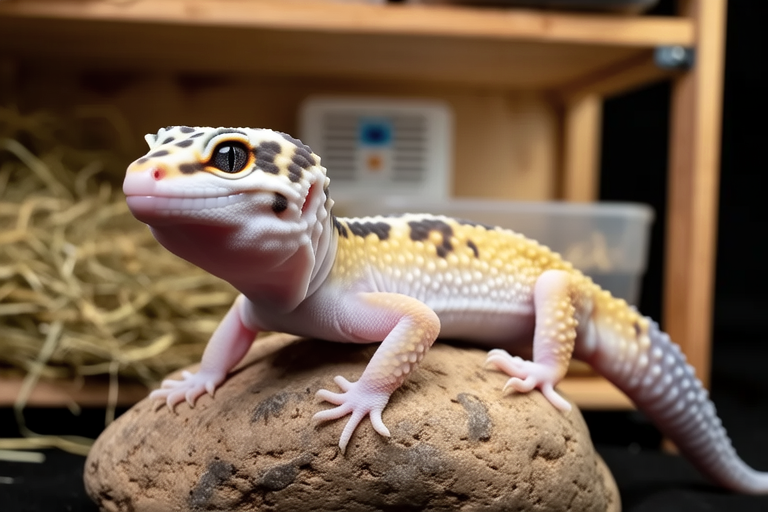
Leopard Gecko Care: A Comprehensive Guide for New and Experienced Owners
Welcome to our comprehensive guide on caring for leopard geckos. Whether you’re a first-time owner or have been keeping these charming reptiles for years, this article will provide you with valuable insights into their care, ensuring your pet lives a long and healthy life.
Habitat Setup
Creating an ideal environment for your leopard gecko is crucial for its well-being. This section covers substrate, temperature, and humidity requirements.
Substrate
The substrate you choose for your leopard gecko’s enclosure can significantly impact its health. Avoid substrates that pose ingestion risks, such as sand or small gravel. Instead, opt for safer alternatives like reptile carpet, paper towels, or eco-friendly bedding products specifically designed for reptiles.
Temperature
Maintaining the correct temperature gradient within the enclosure is vital. Leopard geckos require a warm basking area (around 88-90°F) and a cooler side (70-75°F). Use a heat mat or ceramic heater to achieve this, ensuring there’s no direct contact between the heat source and the gecko.
Humidity
Leopard geckos thrive in relatively dry environments. Aim for humidity levels between 30% and 40%. Proper ventilation ensures adequate air circulation while preventing moisture buildup.
Diet and Feeding Habits
Understanding what and how to feed your leopard gecko is essential for its nutrition and overall health.
Diet Composition
Leopard geckos are insectivores, primarily consuming crickets, mealworms, and dubia roaches. It’s important to gut-load insects with nutritious foods before feeding them to your gecko, enhancing their nutritional value.
Feeding Schedule
Feed juveniles daily, reducing to every other day as they mature. Adults typically need feeding every two to three days. Offer a variety of prey items to ensure a balanced diet.
Health Care
Regular monitoring and proper care can prevent many common ailments in leopard geckos.
Common Diseases
Metabolic bone disease (MBD) and impaction are prevalent issues. MBD results from calcium deficiency, while impaction occurs when indigestible material blocks the digestive tract. Regular veterinary check-ups and a balanced diet help mitigate these risks.
Signs of Illness
Watch for unusual behaviors, such as lethargy, loss of appetite, or difficulty moving. Discoloration, open-mouth breathing, or swollen limbs may indicate serious health issues requiring immediate attention.
Handling Tips
Proper handling techniques ensure your gecko remains stress-free and safe.
Approach and Handling
Handle your gecko gently, supporting its body fully. Avoid pinching or squeezing, and always wash your hands before and after interaction. Leopard geckos generally tolerate handling well but may show signs of stress if overhandled.
Breeding Information
If you’re interested in breeding leopard geckos, understanding the process is key.
Preparation
Ensure both male and female geckos are at least one year old and weigh around 40 grams. Provide a cool period (brumation) lasting several weeks, simulating seasonal changes. This encourages mating behavior.
Mating and Egg Laying
After brumation, males and females are introduced. Females can lay up to five clutches per year, each containing one or two eggs. Eggs are typically buried in a specially prepared nesting box.
Advice for Novice and Seasoned Owners
Whether you’re new to leopard gecko ownership or a seasoned keeper, here are some tips:
For New Owners
Start by researching thoroughly and preparing the appropriate habitat. Choose a reputable breeder or pet store for your gecko. Consult experienced keepers or veterinarians for guidance. Join online forums or local clubs for support and advice.
For Experienced Owners
Continuously update your knowledge on leopard gecko care. Experiment with different substrates, lighting, and feeding methods to find what works best for your pets. Share your experiences and expertise with newcomers, helping to promote responsible pet ownership.
In conclusion, providing optimal care for your leopard gecko involves understanding its specific needs regarding habitat, diet, and health. By following the guidelines outlined in this article, you can ensure your gecko enjoys a happy and healthy life. Remember, patience and dedication are key to successful reptile keeping.