
Top 10 Facts About Clownfish That Will Leave You Hooked!
Welcome to a delightful dive into the world of clownfish! These colorful and charismatic creatures have captured hearts and imaginations across the globe. Whether you’re a seasoned aquarist or just curious about marine life, there’s always something new to learn about these fascinating fish. Let’s uncover ten incredible facts that will surely hook you into the enchanting world of clownfish.
1. Symbiotic Partners with Sea Anemones: A Match Made in Marine Heaven
Clownfish are perhaps best known for their close relationship with sea anemones. This partnership is a prime example of mutualism in nature. Clownfish live among the tentacles of sea anemones, which provide protection from predators. In return, the clownfish bring nutrients to the anemone through their waste and may even attract prey with their movements. The clownfish’s mucus layer, unlike other fish, contains a special substance that protects them from the anemone’s stinging cells, known as nematocysts. This adaptation allows the clownfish to move freely within the anemone without getting harmed. Isn’t it amazing how nature finds ways to create such perfect partnerships?
2. Vibrant Colors: Nature’s Palette at Its Best
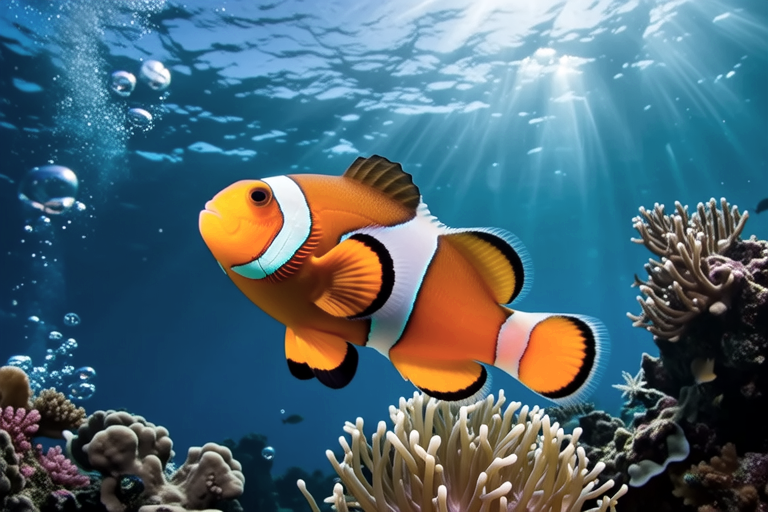
Clownfish come in a variety of striking colors, including orange, yellow, and even black. Their bright hues serve multiple purposes. Firstly, they act as a warning sign to potential predators, indicating that the clownfish might be toxic due to the algae in their diet. Secondly, these colors help them recognize each other and maintain social hierarchies within their groups. Each species has its unique pattern, making identification easier. The most popular, the orange-and-white-striped clownfish, was made famous by the movie “Finding Nemo.” Their vivid appearance is not just for show; it plays a crucial role in their survival and social interactions.
3. Habitat Preferences: The Ocean’s Hidden Gems
Clownfish prefer shallow waters near coral reefs, where sea anemones thrive. They are typically found in the Indo-Pacific region, stretching from the Red Sea to the Pacific Islands. These areas offer ideal conditions for both clownfish and their sea anemone hosts, providing plenty of food and shelter. Coral reefs are incredibly diverse ecosystems, teeming with life, and clownfish have adapted perfectly to this environment. They can be found in lagoons, seaward reefs, and even in tide pools. Clownfish are territorial, defending their home against intruders, ensuring their safety and that of their anemone. Their preference for these habitats underscores the importance of protecting coral reefs, which are under threat from climate change and human activities.
4. Breeding Behaviors: A Fishy Romance
Clownfish exhibit fascinating breeding behaviors that set them apart from many other fish species. They are sequential hermaphrodites, meaning they can change sex depending on environmental conditions. Typically, the largest fish in a group becomes the dominant female, while the second-largest fish is the male. If the female dies, the male can transform into a female to take over reproduction. Clownfish pairs are monogamous and work together to care for their eggs. The female lays thousands of eggs on a flat surface near their anemone, and both parents guard them until they hatch. This cooperative parenting ensures the survival of their offspring, showcasing the complexity of their social structures.
5. Swimming Skills: Masters of Maneuverability
Clownfish are expert swimmers, capable of darting in and out of their anemone homes with ease. Their streamlined bodies and large fins allow them to navigate the complex underwater terrain with agility. They can swim backwards and forwards effortlessly, which is useful when avoiding predators or catching prey. Their swimming prowess also aids in their daily activities, like searching for food and maintaining their territory. Despite their small size, clownfish are no slouches in the water, proving that size doesn’t necessarily determine speed or skill.
6. Diet Diversity: Omnivores Extraordinaire
Clownfish are omnivorous, feeding on a wide range of foods. Their diet includes algae, zooplankton, and small crustaceans. This varied diet helps them obtain all the necessary nutrients for growth and survival. Interestingly, their diet contributes to their toxicity, making them unappealing to some predators. Algae in their diet produce toxins that are harmful if ingested, acting as a natural defense mechanism. Clownfish are opportunistic feeders, meaning they eat whatever is available, adapting their diet based on their environment and food sources. This adaptability is key to their success in different habitats.
7. Social Structure: A Hierarchy of Color
Clownfish live in social groups, often consisting of a breeding pair and several non-breeding individuals. Within these groups, there is a clear hierarchy based on size and color. The largest and brightest fish is usually the dominant female, followed by the male. Smaller fish are typically younger and lower in rank. This social structure ensures stability within the group and helps prevent conflicts. The hierarchy also influences breeding behavior, with only the top pair reproducing. Understanding this social order provides insight into clownfish behavior and their complex relationships within their communities.
8. Temperature Tolerance: Surviving the Heat
Clownfish have remarkable temperature tolerance, allowing them to survive in environments with varying water temperatures. They can withstand fluctuations in temperature better than many other fish species, which is crucial in their tropical and subtropical habitats. However, rising ocean temperatures due to climate change pose a significant threat to clownfish populations. Warmer waters can stress these fish, affecting their health and reproductive capabilities. Conservation efforts are essential to protect clownfish and their habitats from the adverse effects of global warming.
9. Camouflage Experts: Blending Into Their Environment
Clownfish have developed excellent camouflage techniques to stay hidden from predators. Their vibrant colors may seem conspicuous, but they blend seamlessly with the contrasting patterns of their sea anemone hosts. This camouflage not only helps them avoid detection but also allows them to approach prey more easily. Their ability to blend in is a testament to the intricate relationship between clownfish and their environment, highlighting the importance of conservation to preserve these delicate ecosystems.
10. Adaptability: Thriving in Captivity
Clownfish are highly adaptable and can thrive in captivity, making them popular choices for home aquariums. They are relatively easy to care for, provided their specific needs are met. Clownfish require a suitable tank with ample hiding spots and a compatible sea anemone. They also need clean, well-oxygenated water and a balanced diet. Their adaptability to captive environments has made them a favorite among aquarists, but it’s important to ensure proper care to maintain their health and well-being. Responsible ownership means providing a healthy and stimulating environment for these fascinating fish.
In conclusion, clownfish are truly remarkable creatures with unique adaptations and behaviors that make them stand out in the marine world. From their symbiotic relationship with sea anemones to their vibrant colors and breeding habits, there’s always something new to discover about these captivating fish. By learning more about clownfish, we can appreciate the beauty and complexity of marine ecosystems and become better stewards of our oceans. So, next time you spot a clownfish, remember the incredible journey they’ve undertaken to reach their current status as one of the ocean’s most beloved inhabitants.