
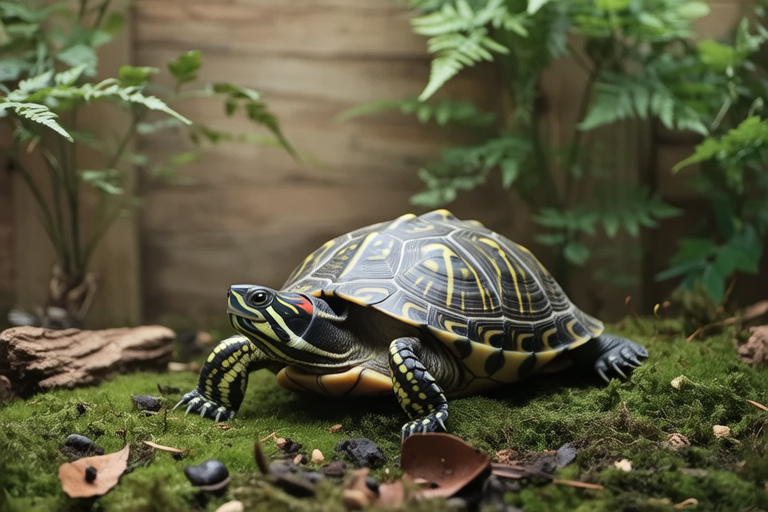
Creating an Ideal Habitat for Shy Three-Striped Box Turtles
The shy three-striped box turtle is a fascinating and captivating reptile that requires specific environmental conditions to thrive. These turtles are native to parts of North America, where they have adapted to a variety of habitats, including woodlands, grasslands, and wetlands. In captivity, it is crucial to replicate their natural environment as closely as possible to ensure their health and well-being. This article provides a comprehensive guide on how to create an ideal habitat for shy three-striped box turtles, covering essential details such as habitat setup, temperature and humidity requirements, appropriate substrate types, hiding spots, lighting needs, water accessibility, diet considerations, and tips for handling these sensitive creatures.
Habitat Setup
When setting up a habitat for your three-striped box turtle, it is important to consider both their physical and psychological needs. A suitable enclosure should be large enough to allow the turtle ample space to move around comfortably, with dimensions of at least 4 feet by 2 feet recommended for adult turtles. The enclosure should also provide a mix of open spaces and areas for the turtle to hide or retreat to when feeling threatened or stressed. A glass tank or outdoor enclosure can be used, but it is essential to ensure proper ventilation and temperature control.
Temperature and Humidity Requirements
Three-striped box turtles are ectothermic animals, meaning they rely on external sources of heat to regulate their body temperature. It is crucial to maintain a consistent temperature gradient within the enclosure to allow the turtle to thermoregulate effectively. The basking area should be kept between 85°F and 90°F (29°C to 32°C), while the cool end of the enclosure should remain between 70°F and 75°F (21°C to 24°C). Nighttime temperatures can drop slightly, but should not fall below 65°F (18°C).
In addition to temperature, humidity levels must be carefully controlled to mimic the turtle’s natural environment. Three-striped box turtles require a relative humidity level of approximately 70% to 80%. To achieve this, misting the enclosure daily and providing a shallow water dish can help maintain the necessary moisture levels. It is also advisable to use a hygrometer to monitor humidity levels accurately.
Appropriate Substrate Types
The choice of substrate is critical for the turtle’s overall health and comfort. An appropriate substrate should be easy to clean, promote good drainage, and prevent bacterial growth. Some popular options include coconut fiber, cypress mulch, and eco-earth. Avoid using substrates like gravel, sand, or small pebbles, as these can pose a choking hazard or cause impaction if ingested.
Hiding Spots
Providing adequate hiding spots is essential for the well-being of shy three-striped box turtles. Hiding spots offer a sense of security and help reduce stress, which is particularly important for these timid creatures. Suitable hiding spots can be created using half logs, cork bark, or custom-built caves. Ensure that the hiding spots are large enough for the turtle to fit inside comfortably and that they are easily accessible from all sides of the enclosure.
Lighting Needs
Proper lighting is vital for the health and well-being of three-striped box turtles. UVB lighting is essential for the synthesis of vitamin D3, which aids in calcium absorption and prevents metabolic bone disease. A high-quality UVB light with a UV index of 3.0 to 5.0 should be provided for 10 to 12 hours per day. It is important to place the UVB light close enough to the basking area so that the turtle can benefit from it, but far enough away to avoid overheating. Additionally, a full-spectrum fluorescent bulb can be used to provide additional light and simulate daylight.
Water Accessibility
Three-striped box turtles are semi-aquatic and require access to fresh, clean water for drinking, soaking, and swimming. A shallow water dish should be provided, with depths ranging from 1 to 2 inches, depending on the size of the turtle. The water should be changed regularly to prevent bacterial growth and contamination. For larger enclosures, a small pond or pool can be added to provide more extensive swimming opportunities.
Diet Considerations
A balanced diet is crucial for the health and longevity of three-striped box turtles. Their diet should consist of a variety of plant matter, insects, and occasional meat. Commercially available turtle pellets can be used as a base, but should be supplemented with fresh vegetables, fruits, and live or frozen insects. Offer a mix of dark leafy greens, such as collard greens, dandelion greens, and romaine lettuce, along with occasional treats like berries, melons, and earthworms. It is important to gut-load feeder insects with nutritious food before offering them to the turtle to maximize their nutritional value.
Tips for Handling
Handling three-striped box turtles should be done with care and consideration for their delicate nature. Always wash your hands before and after handling the turtle to prevent the spread of bacteria. It is also advisable to handle the turtle gently and support its entire body to avoid injury. Limit handling sessions to a few minutes per week to minimize stress and allow the turtle to acclimate to its new environment.
Conclusion
Mimicking the natural environment of shy three-striped box turtles is essential for their health and well-being. By providing a spacious enclosure with appropriate temperature and humidity levels, suitable substrate, hiding spots, proper lighting, water accessibility, and a balanced diet, you can create an ideal habitat for these fascinating creatures. Whether you are a beginner or an experienced turtle owner, following these guidelines will help ensure the long-term health and happiness of your three-striped box turtle.