
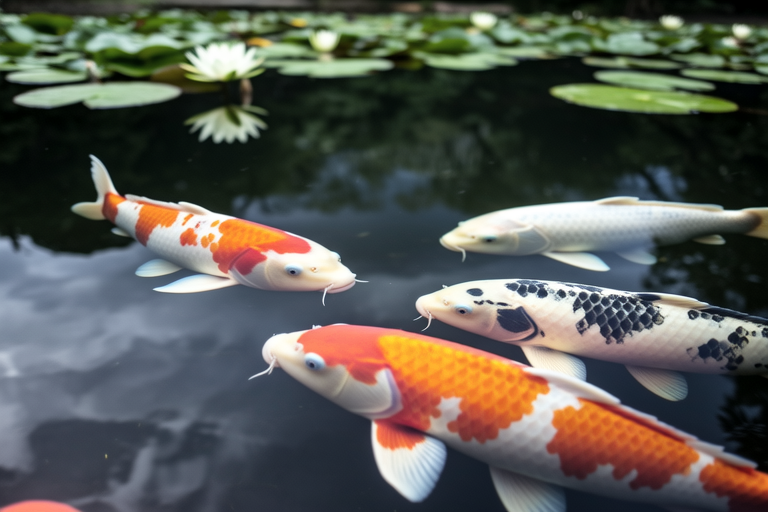
The Fascinating World of Koi Fish: Colors, Genetics, and Symbolism
Koi fish, known for their vibrant and majestic colors, have captivated human imagination for centuries. These beautiful creatures, native to East Asia, are more than just ornamental fish; they embody a rich history and cultural significance. This article delves into the science and mystery behind their captivating hues, the genetics involved in determining their patterns, the impact of diet on color development, and the symbolism associated with different colors in various cultures. Additionally, it provides tips for maintaining optimal water conditions to enhance coloration and highlights the historical significance of koi in art and literature.
Genetics of Koi Coloration
The genetics behind koi fish coloration is a complex interplay of multiple genes. The most significant gene is the melanophore, which determines the presence or absence of black pigment. Other genes control the production of red, orange, white, and blue pigments. The interaction of these genes results in the wide array of colors and patterns seen in koi.
One notable genetic trait is the Sumi, a black pigment that can cover the entire body or appear as spots or stripes. The intensity and distribution of Sumi depend on the interaction between several genes. Another important trait is the Hi, which refers to red or orange pigmentation. The combination of Sumi and Hi produces stunning patterns like the Kohaku, a white fish with red markings.
Understanding these genetic factors helps breeders create new varieties and maintain the integrity of traditional ones. However, breeding for specific colors and patterns can lead to inbreeding and reduced genetic diversity, so careful management is essential.
Diet and Its Impact on Color Development
The diet of koi fish plays a crucial role in their color development. A balanced diet rich in nutrients promotes healthy growth and vibrant colors. High-quality fish food containing carotenoids, such as astaxanthin and beta-carotene, enhances red and orange hues. Similarly, foods enriched with spirulina, a type of blue-green algae, can intensify blue and green pigments.
In addition to commercial fish food, incorporating fresh vegetables like zucchini, spinach, and peas can provide essential vitamins and minerals. Feeding koi with a variety of foods ensures they receive all necessary nutrients for optimal health and coloration.
However, overfeeding can lead to poor water quality and unhealthy fish. It’s essential to feed koi only what they can consume within a few minutes, twice daily. Regular monitoring of water parameters and适时调整喂养量有助于保持水质和鱼的健康。适当的喂养量有助于保持水质和鱼的健康。定期监测水质参数并根据需要进行调整也是至关重要的。此外,确保水中有足够的氧气对于维持鱼的健康和色彩也非常重要。可以通过安装增氧设备或增加水体中的植物来提高氧气含量。此外,确保水中有足够的氧气对于维持鱼的健康和色彩也非常重要。可以通过安装增氧设备或增加水体中的植物来提高氧气含量。此外,确保水中有足够的氧气对于维持鱼的健康和色彩也非常重要。可以通过安装增氧设备或增加水体中的植物来提高氧气含量。