
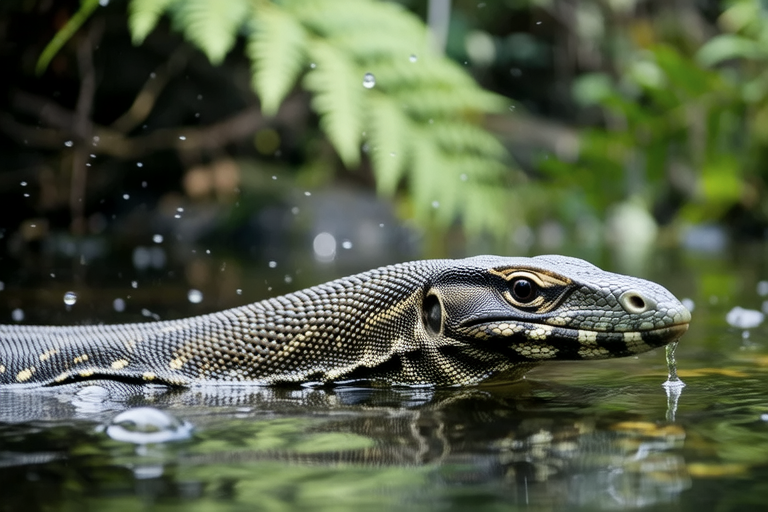
Meet the Mighty Water Monitor: Nature’s Aquatic Explorer
The water monitor (Varanus salvator) is one of the largest lizards in the world, renowned for its remarkable swimming abilities and adaptability to diverse environments. This article delves into the physical characteristics, habitat, diet, and behavior of this fascinating creature, providing insights into its role within ecosystems and current conservation efforts.
Physical Characteristics
Water monitors can grow up to 3 meters in length, with males typically larger than females. Their muscular bodies are covered in tough, scaly skin that provides protection from predators and environmental hazards. The coloration of their scales varies widely depending on their geographical location, ranging from brownish-black to olive-green. Juvenile water monitors have distinct yellow or white bands that fade as they mature. These lizards possess powerful limbs with sharp claws designed for digging, climbing trees, and catching prey. Their long tails are prehensile and act as both a rudder when swimming and a weapon during defense.
Habitat
Native to Southeast Asia, water monitors inhabit a wide range of environments including mangrove swamps, rivers, lakes, and coastal areas. They are highly adaptable and can thrive in both freshwater and saltwater habitats. Their preference for wetlands makes them excellent swimmers, capable of diving to depths of over 4 meters and remaining submerged for up to 30 minutes. Despite their aquatic prowess, water monitors spend considerable time on land, basking in sunlight to regulate body temperature and searching for food.
Diet
Water monitors are opportunistic feeders with a varied diet consisting of insects, small mammals, birds, fish, frogs, and even carrion. Their strong jaws and sharp teeth allow them to tackle larger prey items such as rodents and snakes. Juveniles primarily consume insects and other small invertebrates, while adults expand their menu to include more substantial meals. These lizards play a crucial role in controlling rodent populations, making them valuable members of their ecosystems.
Behavior
Water monitors exhibit several interesting behaviors that contribute to their survival. They are diurnal creatures, meaning they are most active during daylight hours. When threatened, these lizards will hiss loudly and lash out with their powerful tails. If cornered, they may bite fiercely to defend themselves. Mating occurs between April and June, with males competing for access to females through combat. Females lay clutches of 20 to 60 eggs in termite mounds or burrows, which they guard until hatching.
Swimming Abilities
One of the most impressive features of water monitors is their exceptional swimming skills. Equipped with fully webbed feet and strong tail muscles, these reptiles glide effortlessly through water. They can swim at speeds exceeding 25 kilometers per hour, making them formidable hunters. Water monitors use their keen eyesight and sense of smell to locate prey underwater, often chasing fish and other aquatic organisms across vast distances. Their ability to remain submerged for extended periods allows them to explore deeper waters where many predators cannot reach.
Adaptability
Water monitors demonstrate remarkable adaptability to changing environments. They can survive in both densely populated urban areas and remote wilderness regions. In cities, these lizards have been observed scavenging through garbage bins and raiding poultry farms. Their versatility enables them to exploit various food sources and avoid competition with other species. This adaptability has allowed water monitors to maintain stable populations despite habitat loss and fragmentation caused by human activities.
Interactions Within Ecosystems
Water monitors play vital roles within their ecosystems as both predator and prey. As top predators, they help control populations of smaller animals, maintaining ecological balance. Conversely, they serve as food for larger carnivores such as crocodiles and large snakes. Additionally, water monitors assist in seed dispersal by consuming fruits and seeds from plants growing near water bodies. Their burrowing habits also aid in soil aeration and nutrient cycling.
Conservation Efforts
Despite their resilience, water monitors face numerous threats due to habitat destruction, hunting for their skins and meat, and the exotic pet trade. Conservation organizations are working diligently to protect these magnificent creatures. Efforts include establishing protected areas, promoting sustainable harvesting practices, and raising public awareness about the importance of preserving biodiversity. Captive breeding programs aim to reduce pressure on wild populations by supplying the pet market with captive-bred individuals.
Unique Facts About Water Monitors
Water monitors possess some truly extraordinary traits. For instance, they can communicate using a variety of vocalizations, including chirps, growls, and hisses. Some researchers believe these sounds may serve as alarm calls or mating signals. Another fascinating aspect of water monitors is their ability to regrow lost tails, though doing so leaves them vulnerable until regeneration is complete. Furthermore, water monitors are known for their intelligence; they have been observed using tools like sticks to probe crevices for hidden prey.
In conclusion, the mighty water monitor stands out among reptiles as an incredible example of nature’s ingenuity. With its impressive swimming abilities, adaptability to various environments, and significant impact on ecosystems, this species continues to captivate scientists and wildlife enthusiasts alike. By understanding and appreciating the water monitor’s unique qualities, we can better appreciate our shared planet and work towards ensuring its survival for future generations.