
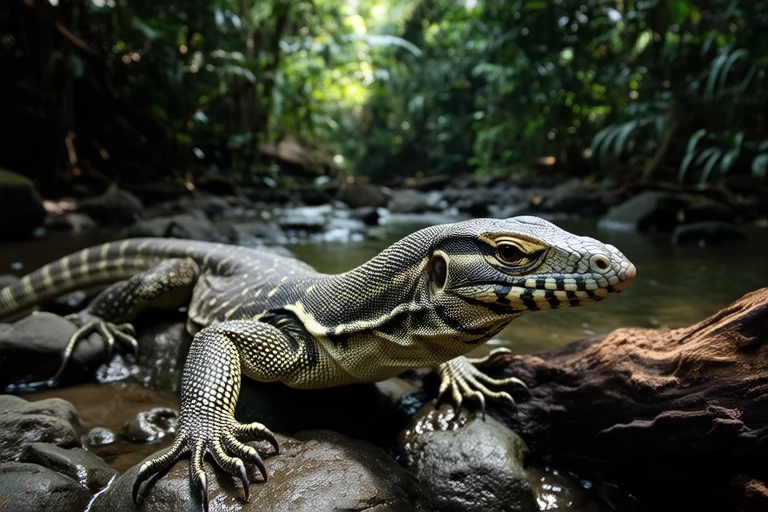
The Secret Life of Water Monitors: What Owners Need to Discover
Water monitors (Varanus salvator) are among the largest lizards in the world, known for their impressive size and striking appearance. They are often sought after by reptile enthusiasts, but owning one requires a deep understanding of their natural habitat, dietary needs, behavioral patterns, and unique care requirements. This guide will delve into the secret life of water monitors, offering insights that can help both prospective and current owners provide the best possible care.
Natural Habitat
Water monitors are native to Southeast Asia, where they inhabit a variety of environments including mangrove swamps, riverbanks, and coastal areas. These lizards are highly adaptable, capable of thriving in both freshwater and saltwater habitats. In the wild, they spend much of their time in or near water, using it as a means of escape from predators and as a source of food. Understanding their natural environment is crucial for creating a suitable living space in captivity.
In the wild, water monitors are active during the day, basking in the sun to regulate their body temperature and seeking out prey in the surrounding waters and vegetation. Their habitat is characterized by dense foliage, rocky shores, and abundant water sources. Captive environments should mimic these conditions as closely as possible, with ample space for swimming and basking, as well as hiding spots and climbing structures.
Dietary Needs
Water monitors are carnivorous, feeding on a wide range of prey items in the wild, including fish, frogs, small mammals, birds, and even carrion. In captivity, their diet should be varied and nutritionally balanced to ensure optimal health. Juvenile water monitors tend to eat smaller prey items like insects, rodents, and feeder fish, while adults may consume larger prey such as chicks and whole rodents.
It’s important to note that water monitors have a high metabolism and require frequent feedings. Feeding them appropriately is essential for their growth and overall health. Overfeeding can lead to obesity, while underfeeding can result in malnutrition. A consistent feeding schedule, tailored to the lizard’s age and size, is key to maintaining a healthy weight and preventing health issues.
Behavioral Patterns
Water monitors are intelligent and curious animals, known for their agility and adaptability. In the wild, they are solitary creatures, only coming together during the breeding season. This solitary nature can pose challenges for captive owners, as water monitors may become aggressive or territorial if they feel threatened or uncomfortable in their environment.
These lizards are also known for their strong swimming abilities and their ability to climb trees. In captivity, providing opportunities for exercise and exploration is vital for their physical and mental well-being. Regular interaction and handling can help establish trust between the owner and the monitor, though it’s important to approach them with caution due to their powerful jaws and sharp claws.
Unique Care Requirements
Owning a water monitor comes with unique responsibilities. These lizards require a large enclosure with plenty of space for swimming, basking, and climbing. The enclosure should include a water area that is deep enough for the lizard to swim comfortably, as well as a dry area for basking and resting. Temperature and humidity levels must be carefully controlled to replicate their natural habitat, with a basking spot that reaches at least 95°F (35°C).
Water monitors are prone to certain health issues, particularly respiratory infections and metabolic bone disease, which can occur if their environment is not properly maintained. Regular veterinary check-ups and a clean, hygienic living space are essential for preventing these problems. Additionally, water monitors require specialized UVB lighting to support calcium absorption and bone health.
Challenges and Rewards of Ownership
Owning a water monitor can be a rewarding experience for those who are prepared for the challenges involved. One of the biggest challenges is the sheer size of these lizards, which can grow to over six feet in length. Providing adequate space and resources for such a large animal requires significant commitment and financial investment.
Another challenge is the potential for aggression. While water monitors can be docile, they are also capable of defending themselves if they feel threatened. Proper socialization and handling from a young age can help mitigate this risk, but it’s important to respect their wild nature and avoid provoking them.
Despite these challenges, owning a water monitor can be incredibly rewarding. Watching these magnificent creatures grow and thrive in a well-maintained environment can be a source of great satisfaction. Their intelligence and adaptability make them fascinating subjects of study, and interacting with them can deepen one’s appreciation for reptiles and the natural world.
Importance of Understanding Wild Nature
Understanding the wild nature of water monitors is essential for providing proper care. These lizards are not domesticated pets but rather wild animals that have been adapted to life in captivity. Respecting their instincts and behaviors, and providing an environment that mimics their natural habitat, is crucial for their well-being.
Owners should educate themselves about the species’ specific needs and challenges before committing to ownership. This includes learning about their dietary requirements, behavioral patterns, and unique care requirements. By doing so, owners can ensure that their water monitors live long, healthy, and fulfilling lives in captivity.
In conclusion, water monitors are remarkable creatures with complex needs that must be met to ensure their health and happiness. While owning one can be a rewarding experience, it is not without its challenges. Prospective and current owners should take the time to learn about these lizards’ natural habitat, dietary needs, behavioral patterns, and unique care requirements. By doing so, they can provide the best possible care for their pet and enjoy the many rewards of owning one of nature’s most fascinating creatures.