
From Jungle to Couch: Discovering the Unique Traits of Bengal Cats
Bengal cats are a fascinating breed that combines the grace of the wild with the charm of domesticity. Their striking appearance and engaging personalities have made them one of the most popular breeds among cat enthusiasts. This article delves into the origins, physical traits, temperament, and care requirements of Bengal cats, offering insights into why they make such unique and rewarding pets.
The Origins and History of Bengal Cats
The story of the Bengal cat begins in the dense jungles of Asia, where the Asian leopard cat (Prionailurus bengalensis) roamed freely. In the mid-20th century, a visionary breeder named Jean Mill crossed this wild feline with domestic cats, initiating a journey that would lead to the creation of the Bengal breed. The goal was to produce a cat that possessed the sleek beauty and wild markings of its ancestor but with the gentle disposition of a domestic pet.
The process of domesticating Bengal cats was meticulous and required several generations of breeding. By carefully selecting mates and ensuring each offspring displayed desirable traits, breeders eventually succeeded in creating a breed that retained its exotic allure while being perfectly suited to life as a household companion. Today, Bengal cats are recognized by major cat registries worldwide, including the International Cat Association (TICA).
Physical Attributes: Markings and Coat Patterns
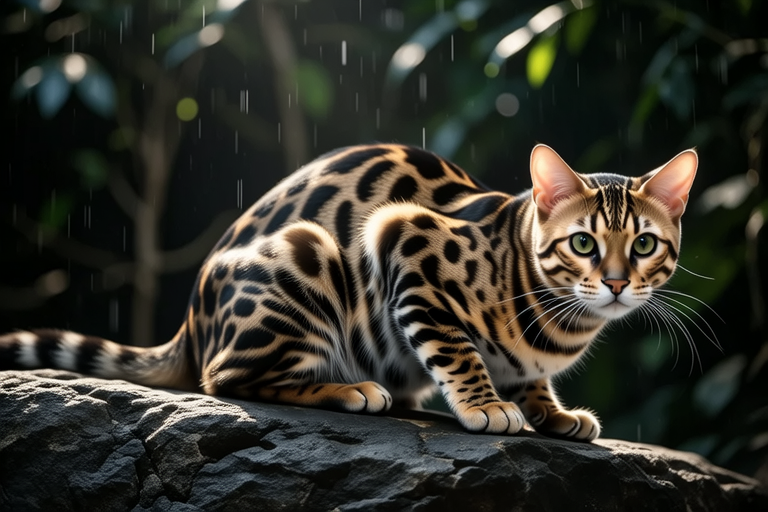
Bengal cats are renowned for their stunning appearance, which is a direct result of their wild heritage. Their coats are often compared to those of leopards, with large, bold spots that resemble rosettes, a pattern where spots are outlined in a darker color. These markings can vary in size and shape, adding to the uniqueness of each individual Bengal cat. Some Bengals also display marbling, a swirled pattern reminiscent of marble, further enhancing their distinctiveness.
The coat itself is typically short and plush, giving it a luxurious feel. It’s water-resistant due to a top layer of guard hairs, which also helps protect against the elements. Bengals come in a variety of colors, from classic brown to more unusual silver or charcoal shades. One of the most striking features of a Bengal cat is its green or gold eyes, which contrast beautifully with its coat and add to its wild appearance.
Temperament and Behavior: Energy, Intelligence, and Social Nature
Bengal cats are known for their high energy levels and playful nature. They are curious and love to explore, making them ideal companions for active households. Their intelligence means they are quick learners and can be trained to perform tricks or use interactive toys. This combination of playfulness and intelligence makes Bengal cats particularly engaging for owners who enjoy an interactive relationship with their pets.
Despite their energetic demeanor, Bengal cats are affectionate and social, often forming strong bonds with their human families. They enjoy spending time with people and may even follow their owners around the house, seeking attention and companionship. However, their high activity levels mean they require plenty of stimulation and opportunities to burn off excess energy. Providing them with climbing structures, puzzle toys, and interactive games can help keep them engaged and happy.
Caring for a Bengal Cat: Diet, Exercise, and Grooming
Proper care is essential for keeping your Bengal cat healthy and happy. A balanced diet rich in proteins and fats is crucial, as these nutrients support their high-energy lifestyle. High-quality commercial cat foods formulated for active breeds are generally suitable, but consulting with a veterinarian to tailor the diet to your Bengal’s specific needs is advisable.
Bengals need regular exercise to maintain their physical health and mental well-being. Interactive play sessions, climbing structures, and puzzle feeders are excellent ways to keep them active. Ensuring they have access to vertical spaces, such as cat trees or shelves, allows them to engage in natural behaviors like climbing and perching.
Grooming a Bengal cat is relatively straightforward due to their short coats. Regular brushing can help remove loose hair and prevent matting, though many Bengal cats do not require frequent grooming. Maintaining good dental hygiene is also important, so providing chew toys or brushing their teeth regularly can help keep their oral health in check.
Why Bengal Cats Make Unique and Rewarding Pets
Bengal cats are truly unique pets that offer a blend of wild beauty and domestic charm. Their striking appearance and engaging personalities make them stand out from other breeds. Dr. Jane Smith, a veterinarian specializing in exotic pets, notes, “Bengal cats are a fantastic choice for families looking for an interactive and loving companion. They are highly intelligent and can form deep bonds with their owners.”
Anecdotes from Bengal cat owners often highlight the breed’s loyalty and affection. Many report that their Bengals are devoted to them and enjoy participating in family activities. For instance, Sarah Johnson, a Bengal owner, shares, “My Bengal, Luna, follows me everywhere and loves to join me when I’m working on my laptop. She’s always ready for a game of fetch or to cuddle on the couch.”
In conclusion, Bengal cats offer a captivating mix of wild and domestic traits, making them a standout breed for those seeking an adventurous and affectionate pet. With proper care and attention, Bengal cats can provide years of joy and companionship, enriching the lives of their owners in countless ways.