
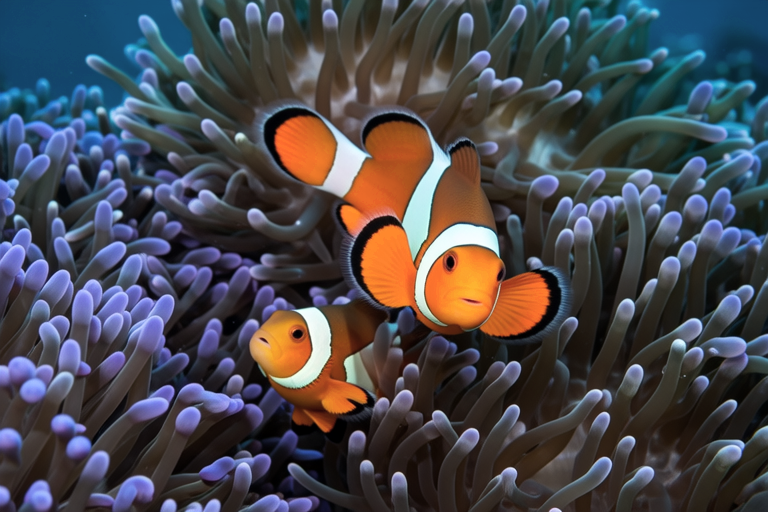
Clownfish and Anemones: A Match Made in Marine Heaven
Welcome to the enchanting world of clownfish and anemones! This article delves into the fascinating symbiotic relationship between these two marine creatures, revealing how each benefits from the other in ways that make their partnership truly extraordinary.
The Symbiotic Relationship
The relationship between clownfish and anemones is one of nature’s most beautiful examples of mutualism. Both species rely on each other for survival, creating a harmonious balance within their aquatic environment. Clownfish, also known as anemonefish, find safety and sustenance within the tentacles of their anemone hosts, while the anemones benefit from the clownfish’s presence in various ways.
One of the primary benefits for clownfish is the protection provided by their anemone hosts. The tentacles of anemones are equipped with venomous nematocysts, which they use to capture prey and deter predators. However, clownfish have developed a unique adaptation that allows them to live among these tentacles without getting stung. Their bodies are covered in a mucus layer that chemically matches the anemone’s own mucus, making them invisible to the anemone’s sensory mechanisms. This adaptation ensures that the clownfish can navigate through the anemone’s tentacles safely, using them as a refuge from larger predators like eels and stingrays.
In return, clownfish offer several advantages to their anemone hosts. They help keep the anemone clean by eating any debris or dead tissue that accumulates around it. Additionally, clownfish are territorial and will defend their host anemone from potential threats, including other fish that might try to eat it. This aggressive behavior deters predators and competitors, ensuring the anemone remains undisturbed. Furthermore, clownfish assist in distributing the anemone’s offspring by swimming through the water, carrying the larvae to new locations where they can establish themselves.
Diverse Species and Hosts
There are many species of clownfish, each with its own distinct coloration and patterns. Some of the most popular include the ocellaris clownfish, also known as the false clownfish, which is recognized by its orange body with white stripes; the percula clownfish, which has three white stripes and is slightly smaller than the ocellaris; and the maroon clownfish, a large, robust species with reddish-brown coloring. Each species has its preferred anemone hosts, with some being more selective than others.
The ocellaris clownfish typically chooses the Heteractis magnifica, or the magnificent sea anemone, as its host. This anemone is characterized by its long, flowing tentacles and is often found in shallow waters. The percula clownfish, on the other hand, prefers the Heteractis crispa, or the Ritteri sea anemone, which is known for its shorter, thicker tentacles. The maroon clownfish is less picky and can be found with a variety of anemone species, including the Entacmaea quadricolor, or the bubble tip anemone, which is recognizable by its bulbous tentacle tips.
Interesting Behaviors and Facts
Clownfish exhibit a wide range of interesting behaviors that make them captivating subjects for both marine biologists and casual observers alike. One of the most intriguing aspects of their behavior is their reproductive habits. Clownfish are sequential hermaphrodites, meaning they can change sex throughout their lifetime. In a typical group, there is one dominant female, one male, and several smaller, non-breeding males. If the dominant female dies, the largest male will transform into a female to take her place, ensuring the continuity of reproduction within the group.
Another fascinating aspect of clownfish behavior is their ability to communicate with their anemone hosts. Clownfish have been observed performing specific movements and behaviors, such as rapid swimming and head shaking, which may serve to stimulate the anemone and enhance their mutualistic relationship. These actions could help strengthen the chemical compatibility between the clownfish and the anemone, ensuring that both species continue to thrive together.
Despite their small size, clownfish are surprisingly bold and fearless when it comes to defending their territory. They will actively chase away potential threats, even if the intruder is much larger than themselves. This bravery is crucial for maintaining the integrity of their symbiotic relationship, as it helps protect the anemone from harm and ensures that both species can continue to benefit from their partnership.
The Importance of Habitat Preservation
As with all marine ecosystems, the survival of clownfish and anemones depends on the preservation of their natural habitats. Coral reefs, where these creatures predominantly reside, are under threat from climate change, pollution, and overfishing. Rising ocean temperatures can lead to coral bleaching, a phenomenon in which corals expel the algae living in their tissues, causing them to turn completely white. Without these corals, anemones lose their preferred attachment points, and clownfish are left without their protective homes.
Pollution, particularly plastic waste and chemical runoff, poses another significant danger to clownfish and anemones. Plastic debris can entangle or suffocate these animals, while chemicals can disrupt their hormonal systems and reproductive cycles. Overfishing, especially of predator species, can also disturb the delicate balance of the reef ecosystem, leading to imbalances that threaten the survival of clownfish and their anemone hosts.
To ensure the continuation of this remarkable partnership, it is essential to support conservation efforts aimed at protecting coral reefs and their inhabitants. By reducing our carbon footprint, minimizing waste, and advocating for sustainable fishing practices, we can help preserve the marine environments that are so vital to the survival of clownfish and anemones. Through education and awareness, we can inspire future generations to appreciate and protect these incredible creatures and the intricate relationships they share with their surroundings.
So next time you visit an aquarium or dive into the ocean, take a moment to observe the clownfish darting among the anemones. Marvel at the beauty of their colors, the precision of their movements, and the deep connection they share with their hosts. Remember that every action we take to protect our oceans contributes to the survival of these fascinating creatures and the countless other species that call the seas home.