
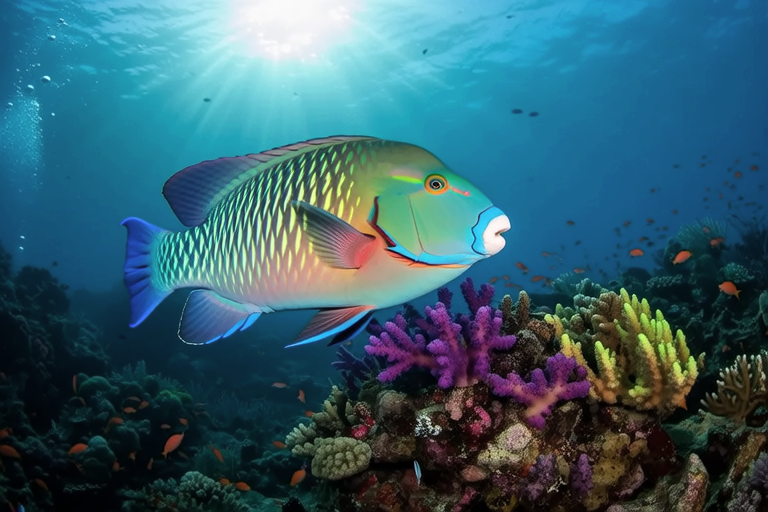
The Secret Lives of Parrot Fish: Beyond Their Vibrant Colors
Parrot fish, with their dazzling array of colors and intricate patterns, are among the most visually striking inhabitants of coral reefs. However, beneath their mesmerizing exteriors lies a world of hidden behaviors, unique adaptations, and lesser-known facts that reveal their critical role in marine ecosystems. This article delves into the fascinating aspects of parrot fish, from their nocturnal transformations and feeding habits to their reproductive strategies and contributions to coral reef health.
Unique Adaptations and Nocturnal Transformations
Parrot fish possess an array of remarkable adaptations that enable them to thrive in their aquatic environment. One of the most intriguing features is their ability to undergo dramatic physical changes during the night. Many species of parrot fish exhibit a phenomenon known as “night-time color change,” where they transform from their vibrant daytime hues to more subdued shades. This transformation is thought to be a defense mechanism against predators who may find it harder to spot them in the dark.
In addition to their nocturnal color shifts, parrot fish have specialized teeth arranged in rows, which resemble a parrot’s beak. These teeth are continuously growing and are used to scrape algae off coral surfaces. The teeth are so strong that they can even grind through calcium carbonate, the material that makes up coral skeletons. This adaptation allows parrot fish to feed efficiently and maintain healthy coral reefs by preventing algae overgrowth.
Feeding Habits and Their Role in Coral Reef Health
Parrot fish play a vital role in maintaining the balance of coral reef ecosystems. They are herbivores, primarily feeding on algae that grow on coral surfaces. By consuming these algae, parrot fish prevent them from smothering corals and competing for space and nutrients. This grazing activity helps promote the growth of new coral polyps and contributes to the overall health and resilience of coral reefs.
Interestingly, after digesting the algae, parrot fish excrete sand. Their digestive system breaks down the calcium carbonate found in the algae, and this waste product becomes part of the sediment that forms beaches. In some tropical regions, up to 80% of the sand on beaches is believed to come from parrot fish. This process underscores the significant impact these fish have on shaping coastal environments.
Reproductive Strategies and Social Structures
Parrot fish exhibit diverse reproductive strategies that vary between species. Some species are protogynous hermaphrodites, meaning they begin life as females but can later transition into males. This unique trait allows populations to adapt to changing environmental conditions and ensures genetic diversity within the species. Other species engage in complex mating rituals, including colorful displays and synchronized spawning events.
These fish also display distinct social structures. Many species form harems, where one dominant male controls several females. However, some species live in monogamous pairs or small groups. Communication within these groups often involves visual cues, such as body movements and color changes, as well as sound production. Parrot fish can produce various sounds, including grunts and pops, which may serve different purposes, like establishing territory or attracting mates.
Myths and Misconceptions About Parrot Fish
Despite their importance to marine ecosystems, there are several myths and misconceptions surrounding parrot fish. One common myth is that they are harmful to coral reefs. While it is true that parrot fish consume algae that could otherwise overwhelm corals, they do not pose a direct threat to the coral itself. Instead, their grazing activities help maintain a healthy balance within the ecosystem.
Another misconception is that all parrot fish species look alike. In reality, there is significant variation in size, shape, and coloration among different species. Some species can grow up to three feet long, while others remain relatively small. Additionally, their patterns and markings can range from simple stripes to elaborate designs that resemble intricate mosaics.
Conservation Efforts and Future Outlook
Given the crucial role that parrot fish play in maintaining coral reef health, conservation efforts are essential to protect these species and the ecosystems they inhabit. Overfishing and habitat destruction pose significant threats to parrot fish populations. To address these challenges, various organizations and governments have implemented measures to regulate fishing practices and establish marine protected areas.
Efforts to restore damaged coral reefs also benefit parrot fish by providing them with suitable habitats. Coral restoration projects often focus on creating artificial reefs or transplanting healthy coral fragments to degraded areas. These initiatives not only aid in the recovery of coral reefs but also support the diverse communities of organisms, including parrot fish, that depend on them.
Conclusion
Parrot fish are much more than just beautiful creatures with vibrant colors and patterns. They are integral components of marine ecosystems, playing vital roles in maintaining coral reef health and contributing to the formation of beaches. Understanding their hidden behaviors, unique adaptations, and lesser-known facts provides valuable insights into the importance of conserving these fascinating animals and the ecosystems they inhabit. As we continue to explore the secrets of parrot fish, it becomes increasingly clear that protecting them is essential for preserving the rich biodiversity of our oceans.