
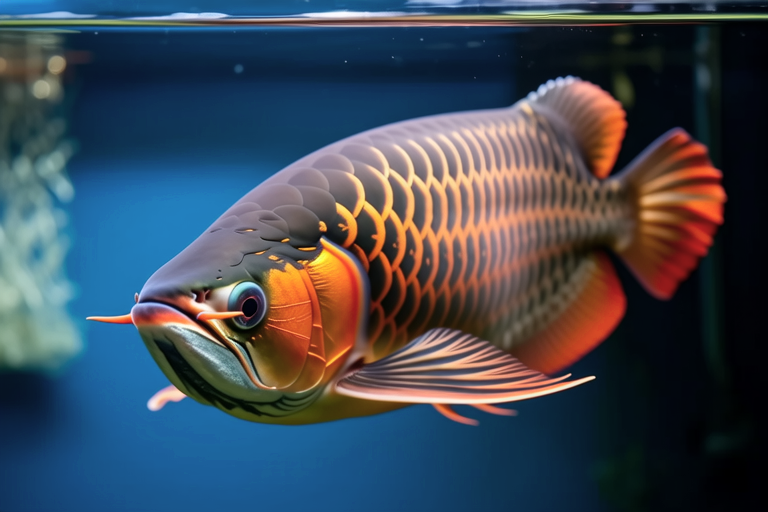
The Majestic Arowana: Myths, Facts, and Why It’s More Than Just a Fish
The Arowana, also known as the “Dragon Fish” or “Lung Fish,” has captivated human imagination for centuries. Originating from the lush tropical regions of Asia, South America, and Africa, this remarkable creature has earned its reputation as the “flying dragon” of the aquatic world due to its extraordinary leaping abilities. The Arowana’s allure extends far beyond its striking appearance, with myths and legends surrounding its status as a symbol of luck and prosperity in many Asian cultures.
Myths and Legends
In Asian folklore, the Arowana is often depicted as a harbinger of good fortune. In Chinese culture, it is believed that owning one can bring wealth and success. This belief is rooted in the Arowana’s vibrant colors and regal presence, which are thought to ward off evil spirits and attract positive energy. The fish’s scales are said to resemble coins, further reinforcing its association with financial abundance. Similarly, in Malaysian and Indonesian cultures, the Arowana is revered for its protective qualities, believed to shield homes and businesses from harm.
Factual Details
Despite these mythical associations, the Arowana is a fascinating fish in its own right. Physically, it is characterized by its elongated body, sharp teeth, and large scales. These features contribute to its streamlined shape, allowing it to swim swiftly through water. Arowanas typically grow up to three feet in length and can weigh up to 20 pounds, making them one of the largest freshwater fish in the world. Their eyes are positioned high on their heads, providing excellent vision above and below the waterline, which is crucial for their predatory behavior.
When it comes to habitat, Arowanas prefer slow-moving rivers, lakes, and flooded forests. They are found in regions with warm climates, where temperatures range between 78°F and 86°F (25°C and 30°C). These conditions are essential for their survival, as they require stable environments with abundant oxygen and vegetation for cover. The Arowana’s diet consists mainly of smaller fish, insects, and crustaceans, but some species have been observed eating fruits and seeds, indicating a degree of omnivorous behavior.
Arowanas are known for their unique behaviors, particularly their ability to leap out of the water. This skill is not only a testament to their strength but also serves practical purposes. They use it to catch prey that may be beyond the reach of their gills, such as insects flying near the surface. Additionally, this behavior can be seen during mating rituals, where males perform acrobatic displays to attract females.
Evolutionary Adaptations
The Arowana’s ability to leap out of water is one of the most intriguing aspects of its biology. This adaptation is believed to have evolved over millions of years, enabling the fish to survive in environments with limited food resources. Scientists suggest that the Arowana’s strong pectoral fins and powerful muscles play a significant role in its ability to breach the water’s surface. These features allow it to generate enough force to propel itself into the air, where it can capture prey or escape predators.
Another remarkable adaptation is the Arowana’s ability to breathe air. While they primarily rely on gills for respiration, they possess a specialized organ called the labyrinth organ, which allows them to extract oxygen from the air. This adaptation is particularly useful in stagnant waters with low oxygen levels, ensuring their survival even in challenging conditions. The labyrinth organ is also thought to have played a crucial role in the evolution of the Arowana, contributing to its adaptability and resilience.
Cultural Significance
Beyond its biological uniqueness, the Arowana holds deep cultural significance. In many Asian societies, it is considered a symbol of power and prestige. Wealthy individuals often display Arowanas in ornate aquariums, showcasing their wealth and social standing. However, this practice has raised concerns about the ethical treatment of the fish and the sustainability of wild populations. Conservation efforts have been initiated to protect endangered species, such as the Asian Arowana, which is listed as critically endangered by the International Union for Conservation of Nature (IUCN).
Efforts to conserve the Arowana involve breeding programs aimed at increasing population numbers while reducing pressure on wild stocks. These initiatives focus on maintaining genetic diversity and ensuring the health of captive-bred individuals. Additionally, educational campaigns are being implemented to raise awareness about the importance of responsible pet ownership and the need for sustainable practices in the aquarium trade.
Challenges in Care
Owning an Arowana can be a rewarding experience for enthusiasts who are prepared for the challenges involved. Proper care requires a spacious tank with ample filtration and aeration to maintain optimal water quality. Arowanas are sensitive to changes in their environment, so regular monitoring of pH levels, temperature, and dissolved oxygen is essential. Providing a varied diet that mimics their natural prey is also important for their overall health and well-being.
Behavioral enrichment is another aspect of Arowana care that should not be overlooked. These intelligent creatures benefit from mental stimulation, which can be achieved through the provision of toys, puzzles, and interactive feeding methods. Ensuring that they have plenty of space to explore and express natural behaviors is crucial for their emotional and physical health. Regular veterinary check-ups and prompt attention to any signs of illness are also vital components of responsible ownership.
While the Arowana may be more than just a fish in terms of its cultural significance and evolutionary adaptations, it remains a complex and demanding pet. For those willing to commit to its care, the rewards are immense. The Arowana’s beauty, intelligence, and resilience make it a truly majestic creature that continues to inspire awe and fascination.
In conclusion, the Arowana is much more than a mere fish; it is a living embodiment of nature’s ingenuity and a cultural icon. Its ability to leap out of water, breathe air, and thrive in diverse environments showcases the incredible adaptability of life on Earth. By understanding and respecting the Arowana, we can appreciate its true value and work towards preserving this magnificent species for future generations.