
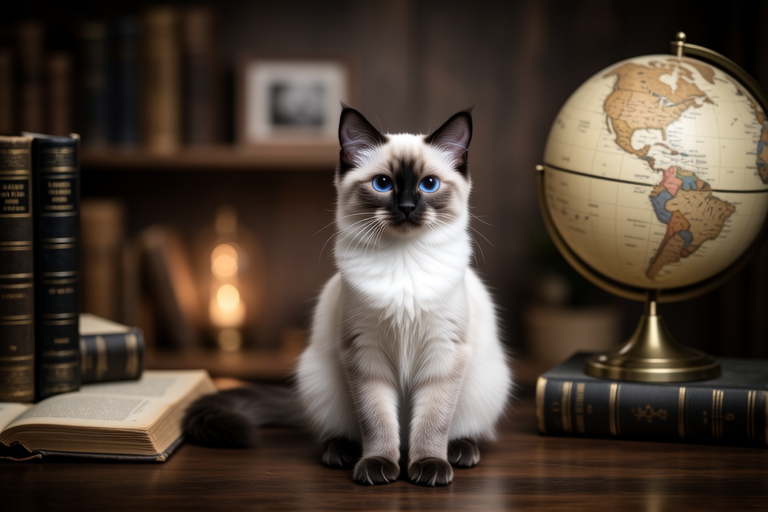
The Royal Heritage of Siamese Cats
Siamese cats have a rich and storied history, with roots deeply embedded in the culture and royalty of ancient Siam, now known as Thailand. These elegant felines have captivated the hearts of cat lovers for centuries, evolving from revered temple guardians to one of the most popular breeds worldwide. This article explores the origins, historical significance, and evolution of Siamese cats, shedding light on their royal heritage, cultural impact, and genetic traits.
Origins and Early History
The earliest records of Siamese cats date back to the 14th century in Siam, where they were highly esteemed and often kept by members of the royal family. These cats were believed to possess mystical powers and were thought to be able to protect their owners from evil spirits. Legends say that Siamese cats were entrusted with guarding sacred objects, such as the Buddha image, by wrapping their tails around it to keep it warm. Their striking blue eyes and dark points made them stand out from other breeds, contributing to their mystique.
The first Siamese cats to reach the Western world were brought to England in the mid-19th century. They were presented as gifts to dignitaries and officials, further cementing their status as symbols of wealth and prestige. One of the earliest recorded instances of a Siamese cat arriving in Europe was in 1871, when a pair was given to the British Consul-General in Bangkok. The cats were exhibited at London’s Crystal Palace Cat Show in 1871, where they attracted considerable attention due to their unusual appearance and exotic origin.
Cultural Impact and Myths
In Thai folklore, Siamese cats are often associated with mythical creatures and supernatural abilities. One popular legend tells of a Siamese cat that saved its master from certain death by leaping onto his chest and breathing life back into him. Another myth claims that the distinctive coloration of Siamese cats is the result of their ancestors’ exposure to the cold winds of the Himalayas, which caused their extremities to darken.
Siamese cats also played a significant role in Thai art and literature. They frequently appeared in traditional paintings and sculptures, often depicted alongside royalty or religious figures. In addition, they were mentioned in several ancient texts, including the “Tamra Maew,” a book of poems written in the 19th century that celebrated the beauty and grace of various cat breeds. These cultural references helped to establish the Siamese cat as an iconic symbol of Thai heritage.
Genetic Traits and Evolution
One of the most distinctive features of Siamese cats is their pointed coloration, which results from a temperature-sensitive gene that causes darker pigmentation in cooler parts of the body. This trait, known as partial albinism, is responsible for the contrast between their pale bodies and darker faces, ears, paws, and tails. Other notable characteristics include large, expressive blue eyes; long, muscular bodies; and wedge-shaped heads.
Over time, selective breeding has resulted in some changes to the appearance of Siamese cats. Early Siamese cats had more moderate body types and rounder heads, but modern breed standards emphasize a more slender, elongated physique. This shift in breeding goals has led to controversy among some cat fanciers who prefer the traditional look of the breed. However, both versions remain popular, with many admirers appreciating the unique qualities of each.
Key Moments in Siamese Cat History
The arrival of Siamese cats in the Western world marked a turning point in their history, introducing them to a broader audience and paving the way for increased popularity. In the early 20th century, Siamese cats became fixtures in American homes, appearing in advertisements and even starring in Hollywood films. Their elegance and intelligence made them ideal companions for busy professionals, and their vocal nature endeared them to those seeking interactive pets.
A pivotal moment in the history of Siamese cats came in 1906 when a Siamese kitten named “Pho” won first prize at the Crystal Palace Cat Show in London. This victory helped to solidify the breed’s reputation as one of the finest in the world and sparked a surge in interest among cat fanciers. Since then, Siamese cats have continued to win awards and accolades at shows across the globe, cementing their status as a beloved breed.
Breeding Practices and Public Perception
The breeding of Siamese cats has been influenced by both aesthetic preferences and practical considerations. Early breeders focused on preserving the distinctive physical traits of the breed while minimizing health issues. In recent years, there has been growing concern about certain inherited conditions, such as cross-eye and kinked tails, which have been linked to inbreeding. As a result, many breeders now prioritize genetic diversity and health testing when selecting mates for their cats.
Public perception of Siamese cats has varied over time, reflecting changing attitudes toward animal welfare and breeding practices. In the past, some people viewed the breed as overly pampered or difficult to care for due to their demanding personalities. However, advances in veterinary medicine and improved understanding of feline behavior have helped to dispel these misconceptions, allowing more people to appreciate the unique qualities of Siamese cats.
Conclusion
The history of Siamese cats is a testament to their enduring appeal and cultural significance. From their origins in ancient Siam to their current status as one of the most popular breeds in the world, these cats have captured the imagination of generations of cat lovers. Their royal heritage, coupled with their distinctive appearance and charming personalities, continues to make them a favorite among pet owners and cat enthusiasts alike.