
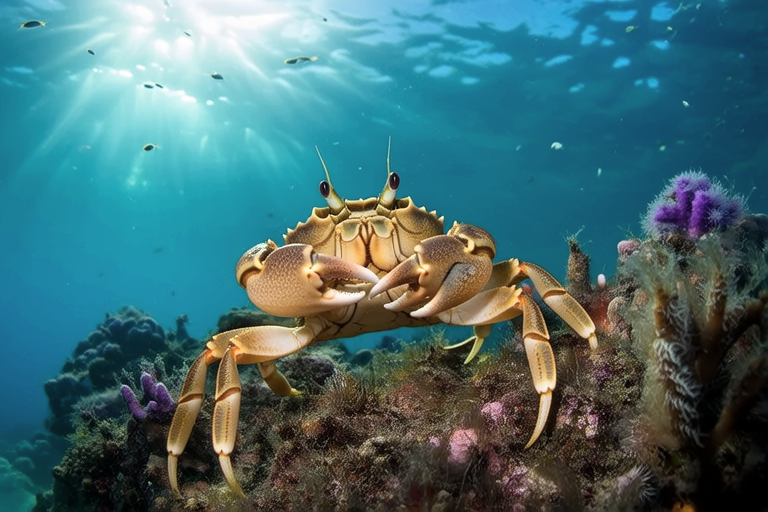
Adventures of the Pea Crab: Unveiling the Ocean’s Mini-Mystery
In the vast and mysterious ocean, where colossal whales glide through the blue and colorful coral reefs flourish, there exists a tiny, unassuming hero – the pea crab. This minuscule creature, no larger than a fingernail, embarks on a journey that is as intricate as it is vital to the ocean’s health. The pea crab’s story is one of symbiosis, survival, and adaptation, offering us a glimpse into the hidden world of marine life.
The Tiny Hero: An Introduction to Pea Crabs
The pea crab, belonging to the Pinnotheridae family, is a diminutive crustacean known for its extraordinary symbiotic relationships. These crabs are often found nestled within the protective arms of sea anemones, barnacles, or even hermit crabs. Their name, derived from their pea-sized appearance, belies their significance in the underwater ecosystem. Despite their small stature, pea crabs play a crucial role in maintaining the balance of marine life.
Pea crabs are typically translucent or pale yellow in color, with soft, delicate shells that allow them to squeeze into the nooks and crannies of their host organisms. They have long, slender legs that aid in their movement within confined spaces. Their eyes, though small, are highly sensitive to light, helping them navigate the dark depths of the ocean.
Habitat and Distribution
These petite creatures are found in oceans across the globe, from the shallow coastal waters to the deep-sea trenches. They prefer environments rich in biodiversity, where they can find suitable hosts and abundant food sources. Pea crabs are most commonly found in temperate and tropical seas, thriving in habitats such as seagrass beds, rocky shores, and coral reefs. Their ability to adapt to various conditions makes them resilient inhabitants of the ocean.
Symbiotic Relationships: A Mutualistic Bond
The pea crab’s most remarkable feature is its symbiotic relationship with its hosts. This mutualistic bond benefits both parties involved. The pea crab finds protection and shelter within the host organism, while the host gains nutrients from the waste products produced by the crab. This relationship is a testament to the interconnectedness of marine life and the delicate balance that sustains it.
Sea anemones, with their vibrant colors and tentacles, provide the perfect sanctuary for pea crabs. The crabs’ presence helps deter predators, ensuring the safety of both. Similarly, hermit crabs offer a mobile home, allowing the pea crab to move from place to place without the need for its own shell. In exchange, the pea crab scavenges for food particles that the hermit crab might miss, contributing to the overall health of the duo.
The Challenges of Survival
The ocean, despite its beauty, is a harsh environment filled with dangers. For pea crabs, the primary challenge lies in finding suitable hosts and avoiding becoming prey themselves. Their small size makes them vulnerable to a variety of predators, including fish, birds, and larger crustaceans. To overcome these threats, pea crabs have developed several adaptive strategies.
One of their most effective defenses is their ability to camouflage themselves within the body of their host. By blending in with the colors and textures of their surroundings, pea crabs become nearly invisible to potential predators. Additionally, their soft, flexible bodies enable them to squeeze into tight spaces, making it difficult for predators to reach them.
Lifecycle and Behavior
The lifecycle of a pea crab is as fascinating as it is complex. After mating, female pea crabs carry their fertilized eggs under their abdomen until they hatch. Once hatched, the larvae float freely in the water column, feeding on plankton and drifting with the currents. Over time, these larvae undergo several molting stages before settling onto a suitable host.
Pea crabs exhibit a wide range of behaviors that are both intriguing and essential for their survival. They are highly social creatures, often living in groups within a single host. This social structure allows them to share resources and protect each other from predators. Additionally, pea crabs are opportunistic feeders, consuming a variety of small organisms, including algae, detritus, and microorganisms.
The Importance of Studying Pea Crabs
While pea crabs may be small, their impact on marine ecosystems is significant. Understanding their behavior and interactions can provide valuable insights into the broader dynamics of ocean life. By studying these miniature marvels, scientists can uncover the secrets of marine biodiversity and develop strategies for conservation.
The pea crab serves as an indicator species, reflecting the health of its ecosystem. Any changes in their population can signal shifts in the marine environment, providing early warnings of potential threats. Moreover, their symbiotic relationships highlight the importance of cooperation and interdependence in the natural world.
In conclusion, the adventures of the pea crab are a testament to the resilience and adaptability of marine life. From their tiny beginnings to their crucial roles in maintaining ocean health, these creatures remind us of the intricate web of life that exists beneath the waves. As we continue to explore the mysteries of the ocean, let us not overlook the smallest players in this grand drama. For it is through their stories that we can truly understand the complexity and beauty of our planet’s aquatic ecosystems.