
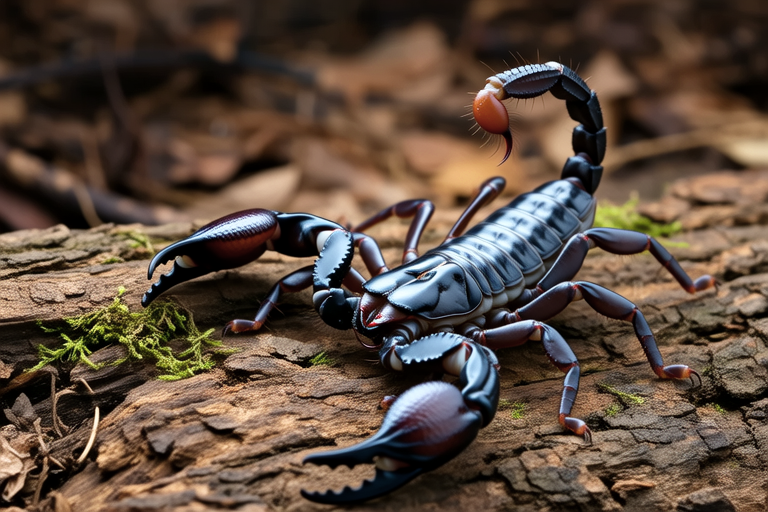
Uncovering the Secrets of the Spiny Night Stalker: Heterometrus Spinifer
Welcome to the mysterious world of the Spiny Night Stalker, scientifically known as Heterometrus spinifer. This enigmatic creature belongs to the family Scorpionidae and is a true marvel of nature, with unique physical characteristics, intriguing behaviors, and a significant ecological role. Let’s delve into the secrets of this fascinating arachnid.
Physical Characteristics
The Heterometrus spinifer is easily recognizable by its distinctive spiny exoskeleton, which serves multiple purposes. These spines provide both protection against predators and aid in burrowing through soil. The scorpion has a pair of large claws, or pedipalps, used for capturing prey and defending itself. Its tail, tipped with a venomous stinger, is a crucial tool for hunting and self-defense.
The coloration of Heterometrus spinifer varies depending on its habitat, but it typically ranges from brown to dark red. This coloration helps the scorpion blend into its surroundings, providing excellent camouflage. Their body length can reach up to 9 centimeters, making them one of the larger scorpion species.
Habitat and Distribution
Native to Southeast Asia, Heterometrus spinifer thrives in tropical rainforests, savannas, and semi-arid regions. They prefer areas with dense vegetation, rocky outcrops, and moist soil, which offer ideal conditions for burrowing and hiding. The species is particularly abundant in countries like Thailand, Malaysia, and Indonesia.
These scorpions are highly adaptable and can survive in various environmental conditions. However, they are most active during the night, when temperatures drop and humidity increases, allowing them to hunt more efficiently. Understanding their preferred habitats is essential for effective conservation efforts.
Behavior and Diet
Heterometrus spinifer is a nocturnal predator, spending most of the day hidden in its burrow and emerging at dusk to hunt. Their diet consists mainly of insects, spiders, and other small invertebrates. Using their keen sense of smell and touch, they track down prey with remarkable precision.
When threatened, these scorpions adopt defensive postures, raising their tails and facing their stingers towards potential threats. While their venom is potent enough to immobilize small animals, it is generally not lethal to humans. Nevertheless, a sting can cause localized pain, swelling, and discomfort.
Unique Adaptations
The Spiny Night Stalker possesses several unique adaptations that set it apart from other scorpion species. One such adaptation is their ability to glow under ultraviolet light, a phenomenon known as fluorescence. This characteristic likely aids in communication and possibly in attracting mates.
Another notable adaptation is their specialized sensory organs called pectines. Located beneath the abdomen, these comb-like structures help the scorpion detect vibrations in the ground, providing vital information about their environment and potential threats.
Ecosystem Role
In their natural habitats, Heterometrus spinifer plays a critical role in maintaining ecological balance. As predators, they control insect populations, preventing overpopulation and reducing competition for resources. Additionally, their burrowing activities contribute to soil aeration and nutrient cycling, benefiting plant growth and overall ecosystem health.
Despite their importance, these scorpions face numerous challenges due to habitat destruction, climate change, and human encroachment. Conservation efforts are necessary to ensure the survival of this species and the ecosystems they inhabit.
Interactions with Humans
While encounters with Heterometrus spinifer are relatively rare, they do occur, especially in rural areas where human settlements overlap with scorpion habitats. Most interactions result in harmless stings, though some individuals may experience allergic reactions requiring medical attention.
It’s important to note that scorpions play a crucial role in controlling pest populations, making them valuable allies in agriculture. Understanding and respecting their place in the ecosystem can lead to more harmonious coexistence.
Myths and Misconceptions
One common misconception about Heterometrus spinifer is that all scorpions are deadly. In reality, only a few species possess venom potent enough to be life-threatening to humans. Another myth suggests that scorpions always glow under UV light, but this is true only for certain species, including Heterometrus spinifer.
Dispelling these myths is essential for fostering a more accurate understanding of these creatures and promoting their conservation. By learning about their true nature, we can appreciate the complexity and beauty of Heterometrus spinifer and its role in our shared environment.
Call to Action
We encourage readers to explore further by visiting local museums, joining citizen science projects, or supporting organizations dedicated to scorpion conservation. Understanding and protecting Heterometrus spinifer and its habitats is crucial for preserving biodiversity and ensuring the health of our planet.
By taking small steps, such as reducing pesticide use and supporting sustainable land management practices, you can contribute to the conservation of this incredible species. Together, we can uncover more secrets of the Spiny Night Stalker and ensure its continued existence for future generations to marvel at.