
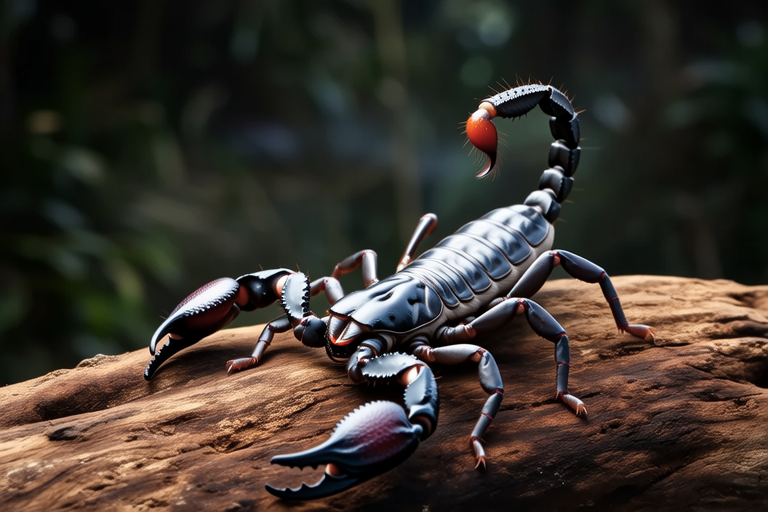
Top 10 Lesser-Known Facts About Heterometrus Spinifer That Will Amaze You
The Heterometrus spinifer, also known as the Indian forest scorpion, is a fascinating creature that resides in the dense forests of Southeast Asia. This scorpion, though not widely recognized, boasts a host of unique features that set it apart from its more famous relatives. Here, we delve into ten lesser-known facts about this remarkable species that will leave you astounded.
1. The Unique Chelicerae Adaptation
Unlike many other scorpions, the Heterometrus spinifer has chelicerae (jaws) adapted specifically for gripping and tearing through tough insect exoskeletons. These powerful jaws can exert an impressive force, allowing the scorpion to efficiently dismantle prey even larger than itself. This adaptation is particularly useful in its dense forest habitat, where prey might be harder to catch and consume due to the thick vegetation.
2. Camouflage Beyond Color
While many animals use color to blend into their surroundings, the Heterometrus spinifer takes camouflage to another level. Its body is covered in tiny hairs that can change texture, providing a surface that mimics the bark of trees or the leaves on the ground. This not only helps it avoid detection by predators but also allows it to surprise unsuspecting prey.
3. Nocturnal Hunting with Thermal Sensitivity
Most scorpions are nocturnal, but the Heterometrus spinifer has evolved an additional advantage: thermal sensitivity. It uses specialized sensory structures called pectines to detect minute temperature changes in its environment. This allows it to locate warm-blooded prey even in complete darkness, making it a formidable hunter.
4. Complex Social Behavior
Contrary to popular belief, not all scorpions are solitary creatures. The Heterometrus spinifer exhibits complex social behaviors, especially during mating season. Males perform intricate dances to attract females, and pairs have been observed hunting cooperatively, sharing food resources and defending territories together. This cooperative behavior is rare among arachnids and underscores the complexity of their social interactions.
5. Venom Variability
The venom of the Heterometrus spinifer is not static but varies based on environmental factors and the age of the scorpion. Younger individuals tend to produce less potent venom, which is sufficient for subduing smaller prey. As they mature, their venom becomes more concentrated, enabling them to take down larger animals. This adaptability ensures the scorpion can thrive throughout its lifespan.
6. Exceptional Longevity
With a lifespan of up to 8 years in the wild, the Heterometrus spinifer is one of the longest-lived scorpion species. This longevity is attributed to its efficient metabolism and the ability to conserve energy by remaining inactive during periods of low prey availability. Their extended life span allows for significant contributions to their ecosystem over time.
7. Aquatic Abilities
Beyond its terrestrial capabilities, the Heterometrus spinifer has developed a surprising aquatic adaptation. It can hold its breath for up to 24 hours and swim effectively if necessary. This ability is crucial in its habitat, where seasonal flooding can occur, ensuring the scorpion’s survival even when faced with sudden changes in its environment.
8. Sensory Pectines
The pectines, located on the underside of the scorpion, serve multiple purposes beyond thermal sensitivity. They are also highly sensitive to vibrations, helping the scorpion detect the presence of potential threats or prey. This dual functionality makes the pectines one of the most versatile sensory organs in the animal kingdom.
9. Parental Care
One of the most surprising aspects of the Heterometrus spinifer is its level of parental care. Females have been observed guarding their offspring for several weeks after birth, teaching them essential survival skills such as hunting techniques and how to avoid predators. This nurturing behavior is uncommon among invertebrates and highlights the complexity of their social structure.
10. Role in Ecosystem Balance
The Heterometrus spinifer plays a critical role in maintaining the balance of its ecosystem. By preying on insects and other small animals, it controls pest populations and contributes to the overall health of the forest. Its presence ensures that no single species dominates, promoting biodiversity and ecological stability.
Reflection on Biodiversity Conservation
Understanding these lesser-known facts about the Heterometrus spinifer is crucial for biodiversity conservation efforts. Each species, no matter how obscure, has a unique role in maintaining the delicate balance of its ecosystem. By studying and appreciating the intricacies of the Heterometrus spinifer, we gain valuable insights into the broader web of life. This knowledge not only enriches our understanding of nature but also underscores the importance of preserving habitats and protecting species like the Heterometrus spinifer, ensuring the continued health and diversity of our planet’s ecosystems.