
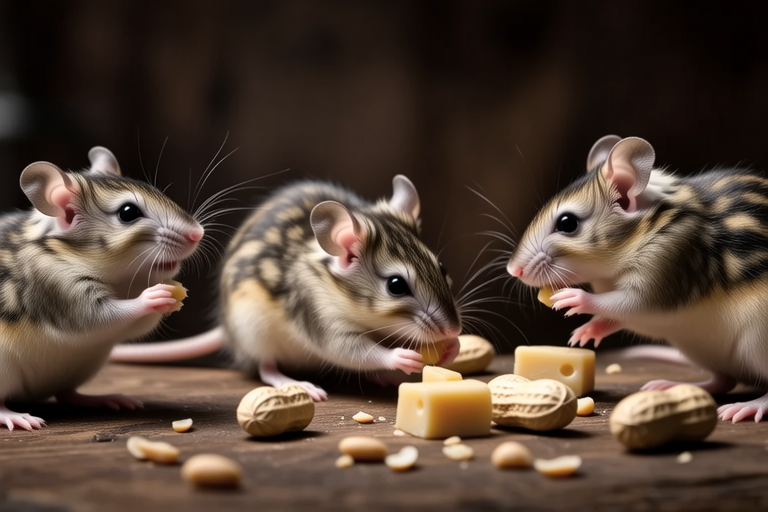
The Secret World of Fancy Rats: Unveiling Their Hidden Behaviors
Fancy rats, also known as domesticated brown rats, have long been cherished as beloved pets for their intelligence, sociability, and playful nature. However, when humans are absent, these small mammals engage in a rich tapestry of behaviors that reveal the complexity of their social structures and daily routines. This article delves into the hidden world of fancy rats, exploring their social interactions, play habits, exploration tendencies, and unique communication methods. We will also examine their nocturnal activities, how they establish dominance or friendship within their groups, and any peculiar rituals or behaviors.
Social Interactions and Group Dynamics
Living in colonies, fancy rats form intricate social hierarchies. Within these groups, they display a range of social behaviors, from friendly grooming sessions to more aggressive displays of dominance. Grooming is a crucial aspect of rat socialization; it strengthens bonds between individuals while simultaneously maintaining hygiene. When one rat grooms another, it’s an act of trust and affection. This behavior helps to reinforce the social structure of the group, promoting cooperation and reducing conflict.
Aggressive behaviors, such as biting or chasing, often occur during disputes over resources like food, space, or mates. In these instances, rats may employ various strategies to assert their dominance, including posturing, vocalizations, and physical altercations. These conflicts can lead to injuries, so it’s essential for owners to provide ample space and resources to minimize competition among their pets.
Play Habits and Exploration Tendencies
When humans are absent, fancy rats engage in extensive play and exploration. Play serves multiple purposes for these animals, including honing survival skills, practicing social interactions, and simply having fun. Rats are incredibly curious creatures, constantly investigating their surroundings with their keen senses of smell, touch, and hearing. They use their whiskers to “see” objects and navigate their environment, making them adept at exploring even the smallest spaces.
Owners can encourage this natural curiosity by providing safe and stimulating environments for their pets. Toys, tunnels, and climbing structures can keep rats entertained and mentally engaged. Additionally, supervised out-of-cage time allows rats to explore new areas and engage in free play with their human companions. This interaction not only strengthens the bond between pet and owner but also provides valuable mental stimulation for the rats.
Nocturnal Activities and Communication Methods
As nocturnal creatures, fancy rats are most active during the night, when they engage in a wide array of activities. During the day, they tend to rest and conserve energy, but once darkness falls, they become lively and energetic. Nocturnal activity patterns are deeply ingrained in their biology, influenced by circadian rhythms and environmental cues such as light and temperature.
Rats communicate through a variety of vocalizations, body language, and scent marking. While much of their communication remains beyond human perception, scientists have identified several distinct sounds rats make, each serving a specific purpose. Ultrasonic squeaks, for example, are used for mating calls and distress signals, while softer chirps may indicate contentment or excitement. Scent marking is another important form of communication; rats use pheromones to claim territory, attract mates, and identify familiar individuals.
Dominance and Friendship Establishment
In groups, fancy rats establish dominance through a combination of physical displays and social bonding. Dominant rats often exhibit more confident body postures, such as standing tall with their tails raised, while subordinates may adopt submissive poses, such as lowering their bodies or tucking their tails between their legs. These postures serve as visual cues that help maintain order within the group.
Friendships among rats are formed through mutual grooming, shared playtime, and cooperative activities. Rats that spend significant amounts of time together tend to develop stronger bonds, which can manifest in increased grooming frequency and more relaxed interactions. Owners can foster positive relationships among their pets by introducing them gradually and providing opportunities for supervised play.
Peculiar Rituals and Behaviors
Fancy rats exhibit several unique behaviors that may seem strange or amusing to human observers. One such behavior is “popcorning,” a term used to describe the sudden, energetic leaps rats sometimes make. This behavior is most commonly observed in younger rats and may serve as a form of exuberant play or excitement. Another intriguing behavior is “tooth chattering,” which can indicate either aggression or contentment, depending on the context.
Rats also engage in complex burrowing behaviors, creating elaborate tunnel systems both in captivity and in the wild. These tunnels serve multiple purposes, including shelter, transportation, and storage of food. Owners can encourage this natural inclination by providing suitable substrates, such as shredded paper or wood shavings, and offering tunnels or tubes for exploration.
Scientific Explanations and Tips for Owners
Understanding the science behind rat behavior can help owners better meet their pets’ needs. For example, rats are highly social animals that thrive in the company of others. Isolation can lead to stress and behavioral issues, so it’s generally recommended to keep rats in pairs or small groups. Providing ample space and resources is also crucial for maintaining harmony within the group.
Owners should be mindful of their pets’ nocturnal nature and adjust their schedules accordingly. Rats are most active during the night, so it’s best to interact with them during their peak hours. This approach not only respects their natural rhythms but also provides an opportunity for meaningful bonding.
Additionally, owners should pay attention to their pets’ communication methods and respond appropriately. By observing vocalizations, body language, and scent marking, owners can gain insight into their rats’ emotional states and respond accordingly. This awareness can help prevent misunderstandings and promote positive interactions.
Conclusion
The secret world of fancy rats is a fascinating realm filled with complex social interactions, playful exploration, and unique communication methods. By understanding these behaviors, owners can better meet their pets’ needs and foster strong, healthy relationships. Whether through play, exploration, or social bonding, fancy rats offer endless opportunities for learning and enjoyment. With patience, observation, and care, owners can unlock the mysteries of their pets’ hidden world and create a rewarding experience for both themselves and their furry companions.