
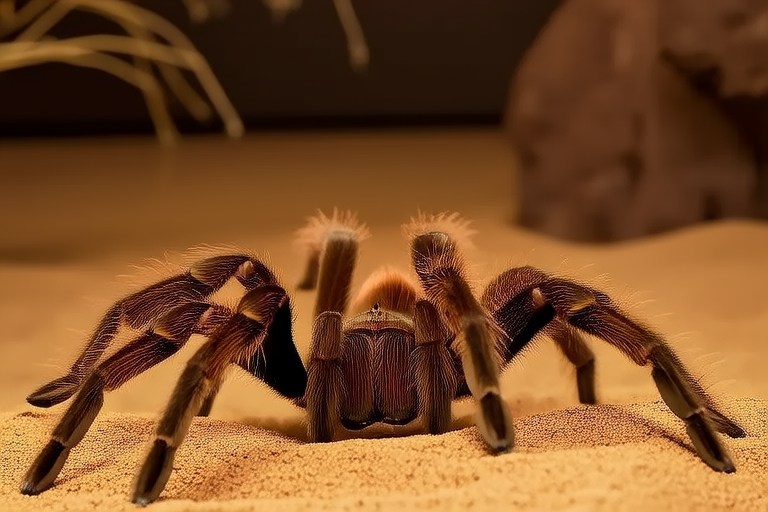
Top 5 Fascinating Facts About the Chilean Rose Tarantula You Didn’t Know
The Chilean Rose Tarantula, scientifically known as Grammostola rosea, is one of the most popular tarantulas among pet enthusiasts. Its vibrant pinkish hues and docile nature make it an attractive choice for those looking into arachnids as pets. However, there’s much more to this spider than meets the eye. Below are five fascinating facts about the Chilean Rose Tarantula that you probably didn’t know.
1. The Chilean Rose Tarantula’s Unique Defense Mechanism: Urticating Hairs
One of the most intriguing aspects of the Chilean Rose Tarantula is its defense mechanism against predators. Unlike many other animals that rely on speed or strength, this tarantula uses urticating hairs located on its abdomen. These specialized hairs can be flicked off the spider’s body when threatened, creating a cloud of irritants that can cause discomfort or allergic reactions in potential attackers. This defense strategy is particularly effective against mammals, which have sensitive eyes and noses. Studies conducted by the American Tarantula Society have shown that these hairs can also cause respiratory issues if inhaled, providing a significant deterrent to predators. Interestingly, the effectiveness of this defense varies among individuals; some tarantulas are more adept at deploying their hairs than others, showcasing a level of adaptability within the species.
2. Exceptional Camouflage Abilities
Camouflage is not just a trait found in insects like stick insects or chameleons. The Chilean Rose Tarantula has mastered the art of blending into its surroundings, making it nearly invisible to both prey and predators. This tarantula’s coloration, which ranges from a pale pink to a deep orange, perfectly matches the sandy and rocky environments of its native habitat in Chile and Argentina. This adaptation allows it to ambush its prey effectively and avoid detection by larger predators. Behavioral studies have shown that the Chilean Rose Tarantula will often remain motionless for hours, waiting for unsuspecting insects to come close enough for a quick strike. Additionally, these spiders have been observed changing their posture slightly depending on the time of day, further enhancing their camouflage abilities. Their ability to remain undetected is crucial for survival in the wild, where every advantage counts.
3. Social Behavior Among Tarantulas: A Rare Trait
Tarantulas are generally solitary creatures, but the Chilean Rose Tarantula exhibits a rare form of social behavior that sets it apart from its peers. While they are primarily solitary, these spiders have been observed living in proximity to other members of their species without showing aggression. In fact, they have been known to share burrows and hunting grounds. This unusual social tolerance is believed to be a result of the abundance of resources in their natural habitat, which allows them to coexist peacefully. Research conducted by zoologists at the University of California, Berkeley, suggests that this behavior may have evolved as a way to maximize efficiency in resource utilization. Observations indicate that when food is scarce, these spiders will work together to catch larger prey, demonstrating a level of cooperation not commonly seen in the animal kingdom. This cooperative behavior is a testament to the complexity of social structures even in seemingly solitary species.
4. Sensory Adaptations for Survival
The Chilean Rose Tarantula possesses an array of sensory adaptations that aid in its survival. One of the most remarkable is its ability to detect vibrations through its legs. Each leg of the tarantula is equipped with tiny hair-like structures called trichobothria, which are highly sensitive to even the slightest movements in the environment. This allows the spider to sense approaching threats or potential prey from great distances. Additionally, the tarantula has excellent vision, despite the common misconception that they are blind. They can detect light changes and movements, though their visual acuity is limited compared to humans. Another fascinating adaptation is their ability to ‘taste’ the air with their pedipalps, which are sensory appendages near their mouth. This helps them determine whether something is edible or dangerous before consuming it. These sensory adaptations make the Chilean Rose Tarantula a highly efficient predator in its natural habitat.
5. Reproduction and Lifespan: A Long Journey
The reproductive cycle of the Chilean Rose Tarantula is a complex process that begins with the male reaching sexual maturity around three years of age. Males typically live for about five years after reaching maturity, while females can live up to twenty years, making them one of the longest-lived tarantulas. During mating, the male creates a sperm web and deposits sperm onto it, then transfers the sperm to his pedipalps. He then searches for a receptive female, which can be challenging given the species’ solitary nature. Once he finds a female, he inserts his pedipalps into her genital opening to fertilize her eggs. After mating, the female lays between 50 and 1,000 eggs, depending on her size and health. She then constructs a silken egg sac to protect them. The eggs hatch after about two months, and the tiny spiderlings remain with their mother for several weeks before dispersing. This extended lifespan and complex reproductive process highlight the resilience and adaptability of the Chilean Rose Tarantula, ensuring its continued presence in its native environment.
In conclusion, the Chilean Rose Tarantula is a remarkable creature with numerous unique traits that make it stand out in the world of arachnids. From its effective defense mechanisms and exceptional camouflage abilities to its rare social behaviors and sophisticated sensory adaptations, this tarantula continues to captivate both researchers and pet owners alike. Understanding these lesser-known aspects not only enriches our appreciation for this species but also underscores the importance of preserving biodiversity in its natural habitat.